The 5 Shittiest Movies I’ve Ever Watched

Having spent a great deal of time extolling the wonders of the 21 greatest movies of all time (in my opinion), I feel it’s time to balance out all that positivity a little bit by listing a few of the shittiest movies I’ve ever watched.

What do I consider a shitty movie? Well, first of all, there are plenty of bad movies out there; you don’t have to look hard to find bad acting, bad storytelling, bad cinematography and bad everything else. As a fan of the TV show Mystery Science Theater 3000 and its spinoff Rifftrax, I have seen a lot of these movies, including Manos: The Hands of Fate, The Pumaman, The Room, and Birdemic. Here’s the thing: it turns out that making a decent movie is really hard. You need hundreds of people to work on it, at least a couple million dollars, tons of expensive equipment, a good script, and above all, a vision. Because of this, I have a lot of respect for filmmakers like Tommy Wiseau and Neil Breen; guys who lack financial backers, big film studios, marketing, and the necessary artistic and technical skills to make decent movies, but do it anyway because they are genuinely passionate and make their movies out of love. The movies themselves may be terrible, but you at least get a sense that the people behind them were genuinely trying. Sometimes, the movies are so terrible that they’re enjoyable. You laugh at the sheer incompetence, the unnatural acting, and hideous special effects. If the measure of a movie is how much you enjoy it, does that truly make them bad?

What I consider to be a genuinely shitty movie is a movie that is unexpectedly bad to the point of being offensive. These are movies you willingly go to the cinema to watch, thinking it’s going to be decent or good because you looked at who was in it and thought “Yeah, this should be at least an entertaining movie”. Then, as the movie progresses, you are utterly blindsided by how awful it is. It’s like being slapped in the face by someone who just told you a great joke. You feel betrayed, angry and genuinely offended that you paid money and hauled your ass to the theater thinking you would have a good night’s entertainment, only to have your time wasted so spectacularly. This is the mark of a shitty movie, and although I try to do my research on movies to ensure I don’t walk into a shitfest, mistakes happen every so often. So, without further ado, here are 5 of the shittiest movies I’ve ever watched:

5 – Jurassic World: Fallen Kingdom (2018)

The first Jurassic Park (1993) wasn’t just a breakthrough for CGI and a landmark blockbuster adventure; it was also a superb meditation on the dangers of man’s reach exceeding his grasp. Two crappy sequels later, the Jurassic Park franchise was rebranded and soft-rebooted as Jurassic World, and the most recent title, Fallen Kingdom, is an absolute travesty and a betrayal of all the things that made Jurassic Park exceptional.

In two separate scenes in Jurassic Park, Ian Malcolm (Jeff Goldblum) and Ellie Satler (Laura Dern) chastise park owner John Hammond (Richard Attenborough) for ignorantly defying mother nature and resurrecting dinosaurs for purely profit-driven reasons. In one memorable exchange, Malcolm tells Hammond: “You stood on the shoulders of geniuses to accomplish something as fast as you could, and before you even knew what you had, you patented it and packaged it, and slapped it on a plastic lunchbox and now you’re selling it.” It blows my mind that the people behind Fallen Kingdom don’t seem to realize how much their movie plays right into those cautionary words. Jurassic Park is an intelligent movie that also happens to be a family-friendly blockbuster. Fallen Kingdom is just a straight-up dumb blockbuster, with a message so childishly simplistic it can be summed up as “We must save the poor dinosaurs!”

Lacking any new ideas,  the filmmakers continued on with the soft-reboot approach and basically copied the story of Jurassic Park: The Lost World, with mercenaries hunting dinos, activists trying to save them, dinos running wild in the city, and greedy corporate executives who get their comeuppance via death by dino. Aside from Owen Grady (Chris Pratt), all the characters are pretty much archetypes. There’s the funny black guy, the tough Latina chick, the mercenary commander who abuses dinos, and the evil corporate stooge who isn’t above murder to have his way. Henry Wu (B.D. Wong), who was surprisingly nuanced in Jurassic World, is also reduced to a villainous eeeevil scientist.

The movie plays out like run-of-the-mill B-grade schlock most of the time, but it’s the ending that really outraged me and put it in my bottom five. All the remaining dinosaurs from Jurassic World are trapped in their cages, with poisonous gas leaking in. They will soon all die, finally erasing the work that John Hammond did and sparing the world further calamity. Claire Dearing (Bryce Dallas Howard), the former park manager of Jurassic World, can push a button to open the cages and save the dinos, but it would set them free and unchecked into human civilization. As much as she loves the dinos, she realizes that after all the death and destruction that has been wrought by bringing them into the modern world, dinos should stay extinct the way mother nature intended. She decides to let them all die. “Wow,” I thought, “This movie actually has some balls.” Then, very unexpectedly, the stupid little girl they saved earlier sneaks up and hits the button to open the cages. The movie tries to show this as a good thing, as triumphant music plays as the dinos run free, but it conveniently ignores that by any logical conclusion, they would inevitably cause havoc in human cities and stomp on hapless civilians. It’s such a jarring, idiotic moment that goes completely against the trajectory of the narrative. It really feels as though they filmed a version in which the dinos die, but at the last minute, the studio realized they wouldn’t have a sequel to profit from and re-shot the ending to have the dinos run free instead. What a betrayal of the entire message of Jurassic Park. What a shitty movie.

4 – White House Down (2013)

At the number 4 spot is a movie that defied my already low expectations, the moronic White House Down. Curiously enough, this movie came out almost at the same time as the vastly superior Olympus Has Fallen, which also features a plot involving a hostile takeover of the White House. Unlike that movie, WHD has little respect for its subject matter and even less for its audience.

This shit movie spends much of its time suffering from the film equivalent of bipolar disorder. It can’t seem to decide if it’s a serious action thriller like Die Hard or a slapstick parody like The Naked Gun. One moment you’re watching Air Force One get blown out of the sky, killing the Vice President and a whole bunch of cabinet members. The next, you’re watching a surreal moment of product placement as the movie stops to show you how much the President of the United States (Jamie Foxx) loves his Air Jordans and will not leave without them.

The plot reads like something out of former President Obama’s id, after it’s been adapted for the screen by a 10-year old. The POTUS has miraculously come up with peace process that will cure the entire Middle East of war by pulling out US forces from the region. The terrorists are entirely composed of right wing fanatics, white supremacists and the like. The Republican Speaker of the House is the true mastermind of the terrorist attacks. The POTUS loves his Air Jordans. And on and on and on.

This would all have been somewhat salvageable with an appealing protagonist, but WHD‘s choice in Channing Tatum, whose range of emotions is narrower than an isosceles triangle, puts a nice, fat .50 cal round in any last traces of hope. It’s basically a stupid movie that thinks its target audience is even stupider. Forget this crap and watch Olympus Has Fallen instead. Same movie, better everything.

3- The Purge: Election Year (2016)
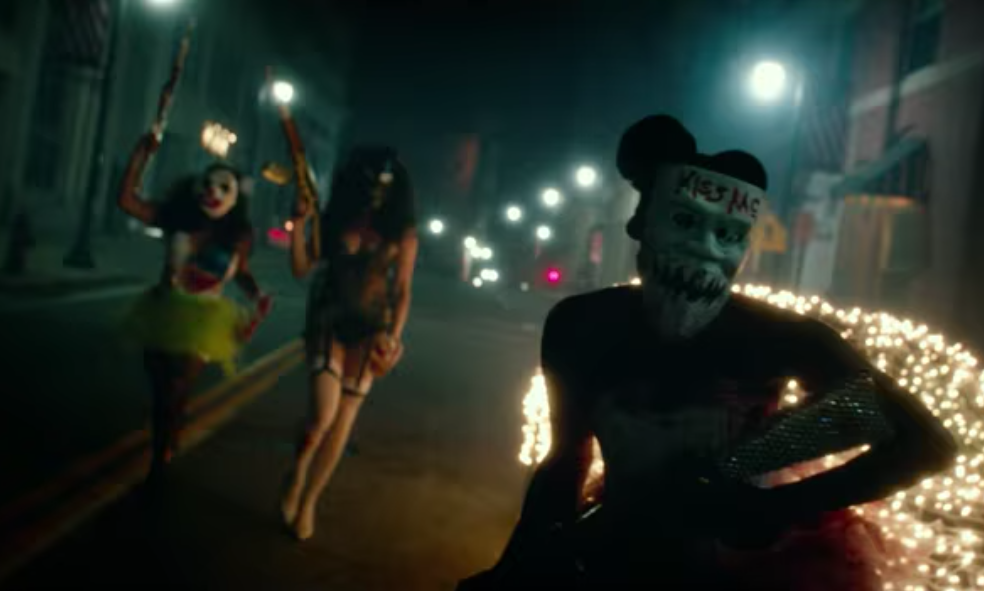
I would have never watched The Purge: Election Year if my friend didn’t have soon-to-expire movie vouchers and the only two remotely viable choices were the all-female Ghostbusters and this. I had watched the first Purge and thought it was decent, so I decided to go with Election Year. I should have gone with Ghostbusters.

Election Year is so mind-bogglingly terrible because it spends a fair amount of time setting the stage for a thrilling survival/tower-defense action narrative, but once things start happening, the movie quickly urinates it all down its pants. The action sequences are incompetently shot, filled with unnecessary slow motion shots that look like they’re building up to something visceral and cathartic, only to fizzle out with a whimper. The cast, headed by the reliable Frank Grillo and Mykelti Williamson, are utterly wasted in one nonsensical sequence after another, and the plot rapidly devolves into a left-wing wet dream.

In a similar vein to White House Down, watching Election Year feels like putting on special glasses that allow you to see America through an SJW’s eyes. You have the streets of Big City, USA turned to chaos thanks to second amendment rights run wild. You have the street-smart black and Latino working class Joes, the former being an ex-gang member who manages to turn a gang of Crips into the good guys by getting them to kill a squad of neo-Nazi soldiers. You have the evildoers, the all-white psuedo-Christian cult that practices human sacrifice. Then you have the main characters, the heroic Hillary Clinton-esque presidential candidate, and her secret service bodyguard. They may not be minorities or members of the average Joes, but they’re “allies”, you see.

It’s so laughably stupid how one-sided and pandering The Purge: Election Year is for a movie made in the 21st century. Towards the end, I thought to myself, “The only way this movie can get any dumber is if the black ex-Crip fist-bumps the white secret service agent,” and seconds later that is exactly what happened. Shit movie is shit.

2- The Happening (2008)

I don’t think there’s a director as high-profile as M. Night Shamalamadingdong whose movies have taken such a dramatic slide into the crap pile. Unlike many other people at the time, I was more appreciative of his work up till The Happening. I really liked Unbreakable, Signs, The Village, and I thought Lady in the Water was weird but okay. Then I watched The Happening and I finally realized this guy had finally lost the plot.

The Happening is an unmitigated disaster because it appears to be devoid of human characters. In a strangely Tommy Wiseau-esque way, the characters and dialogue feel as though they were conceived by an alien who came to planet Earth, discovered a vault of movies and watched a bunch of them, then decided to make one of its own. MNS doesn’t seem to make any effort at realism or inhabiting the multitude of characters, ranging from teachers, to police officers, to army men, to horticulturalists, to mathematicians, in his writing; they all speak in the same bizarre, stilted manner that makes you unsure if you should laugh or not.

The unintentional comedy continues with the plot device involving plants making people kill themselves in increasingly hilarious ways. There’s one scene that’s meant to be taken seriously, in which a guy turns on his lawnmower, slowly walks in front of it, lies down, and allows it to run over him and shred him to pieces. Later on, a curmudgeonly old lady elects to kill herself by walking up to every window in her house and smashing her head through it. Keep in mind, this is what MNS describes as his take on 1960s paranoia movies like The Birds.

I kept wanting this movie to get better and stop making an ass of itself, and it never did. By the time Mark Wahlberg and Zooey Deschanel’s characters are having what’s supposed to be an emotional conversation through a metal pipe between the two separate rooms they’re in, I was praying for a gust of wind to blow into the theater and make this stupid movie kill itself right away. It’s such a catastrophic waste of good actors, premise and production values.

1- Star Wars: The Last Jedi (2017)
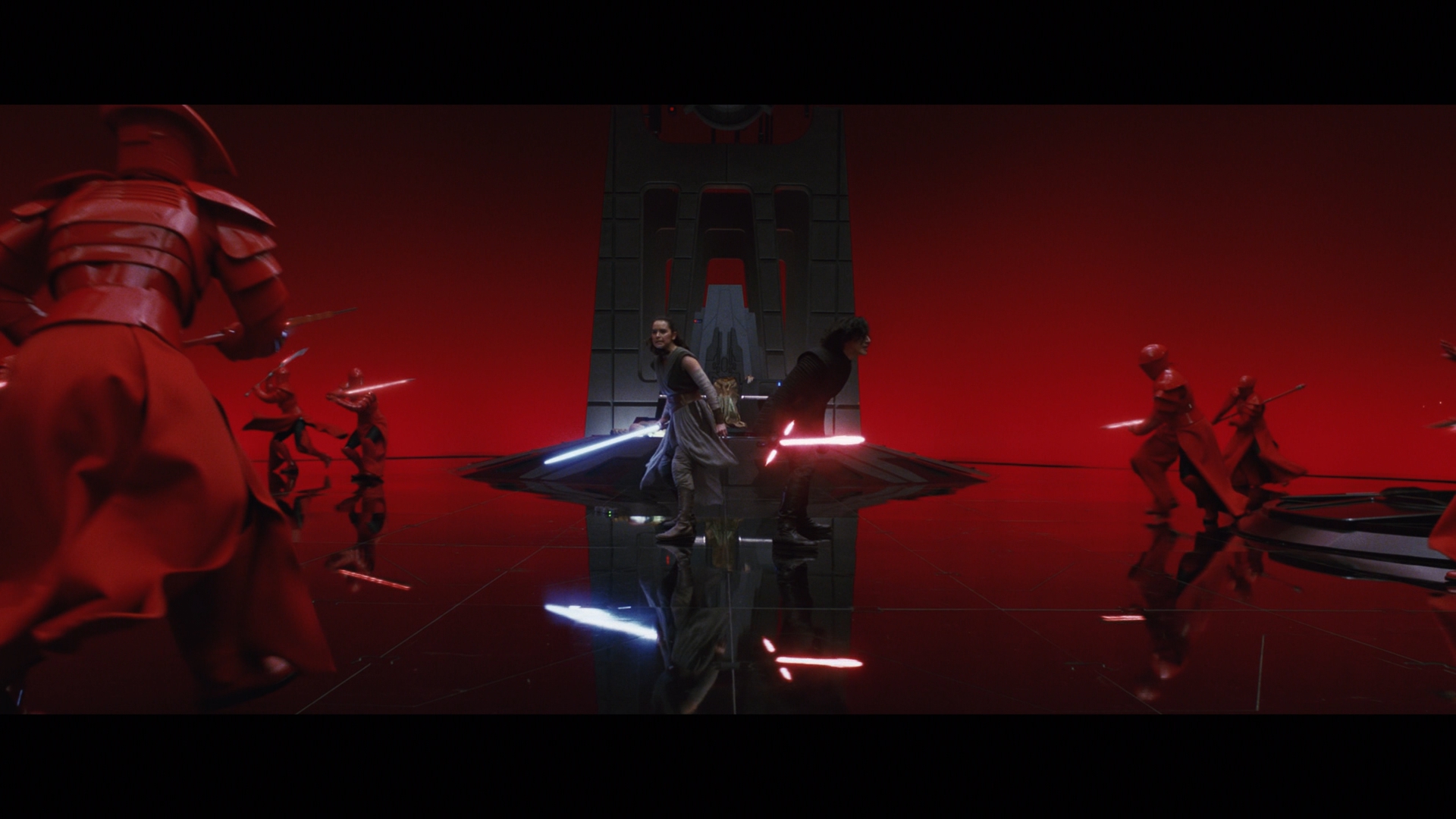
At the coveted (?) #1 spot of shittiest movie I have ever seen is perhaps the biggest “Fuck You” from a film director to fans of a beloved half-century old franchise. Star Wars: The Last Jedi is a textbook example of what happens when a legendary film franchise is hijacked not by incompetent filmmakers, but by filmmakers with political and profit-driven motives and little respect for that franchise and its fans. Literally every aspect of this movie, I am not joking, is a bare-faced insult to anyone who loves Star Wars and good storytelling.

Let’s start with the story, which reaches such levels of garbage-grade nonsense you have to wonder how such trash made it past so many film executives onto the big screen. This new trilogy of Star Wars movies, by the filmmakers’ own admission, was not mapped out ahead of time. They were literally making shit up as they went along each movie, and it definitely shows in TLJ. Written and directed by Rian Johnson, the movie is so screamingly obvious in its complete disregard for anything that happened in the original trilogy and prequels. There are so many strange twists and turns that don’t have any rational purpose, other than to massage Rian Johnson’s dick in his quest to be subversive and make his shit-smeared mark on the Star Wars series.

Even if you are fine with the overtly feminist tone of the movie, even if you are fine with the various acts of subversiveness (e.g. killing off Snoke), and even if you are fine with the ferociously uninteresting new heroes (Rey, Finn, Rose), it is impossible to ignore the fact that about 80% of this 150-minute movie is a complete and literal waste of time. There so many red herrings and roads to nowhere, the likes of which I had previously only seen in The Room. The biggest example is an entire subplot, in which Finn and Rose go to another planet to find a hacker, that turns out to be completely pointless. It instead turns into a strange and hackneyed commentary on animal rights and how rich people profit from war. What the fuck? The Rebels are getting blown to pieces; why in the fuck are Finn and Rose wasting time freeing a bunch of animals and making political commentary? Worst of all, they don’t even find the hacker and instead wind up with a second-rate version of him, played by Benicio Del-Toro, who winds up betraying them, resulting in even more Rebel deaths!

More nefariously, The Last Jedi confirms that this new trilogy is a soft reboot of the original trilogy, with a story that is technically a sequel to the previous movies that nevertheless reuses many of their narrative arcs and settings. Rather than craft an entirely new narrative, the powers-that-be at Disney have made the new trilogy a film equivalent of Hannibal Lecter; murdering the original (sometimes literally, by killing off Han and Luke) and wearing its skin in an attempt to draw a new generation of fans while trying to appeal to the old ones. Rebooting beloved films is one thing. Doing a soft reboot is an insult beyond insults; piggy-backing on the good ideas of the original in order to secretly deliver a spoonful of world-class shit to unsuspecting fans.

I could go on and on with the nearly endless list of stupidities in this terrible movie, but it would be a waste of good words. The main takeaway is this: Star Wars: The Last Jedi, on its own merits, is a classic example of how to make a terrible movie, with unlikable characters and a pointless story. As part of the Star Wars franchise, it will forever be the insult to end all insults; a movie so disgusting and so disrespectfully made that even Mark Hamill didn’t like it. This is clearly, far and away the shittiest movie I’ve ever seen.

Hotel Mumbai is Not For Pussies

Directed by first-time Australian filmmaker Anthony Maras, Hotel Mumbai is a real-life story that is unique in its brutality and unflinching in its courage to depict the 2008 terrorist attack on the Taj Hotel in Mumbai without any sanitizing or political correctness. Though it can be an exhausting experience, it also contains some of the most uplifting portrayals of the heroism and sacrifices that rise out of ordinary people, and the impossible choices they have to make.

Hotel Mumbai is built upon exhaustive research by the filmmakers, who stayed at the real-life hotel the movie takes place in, interviewed numerous hotel staff and guests who were there and studied phone calls between the terrorists and their mastermind. It isn’t hard to see this reflected in the movie. It portrays, with great economy, a full spectrum of emotions and factors to the attacks from the hotel staff,  guests, and even the terrorists. Fear, anger, love, bravery, smart decisions, stupid decisions, and even racism come into play as everyone tries to cope with the insane situation that has been thrust on them, and the relentlessness with which so many of these elements ebb and flow can be a lot for the average viewer to stomach.

The terrorists, surprisingly, are also given a fair shake. Though the movie doesn’t shy from their outright evil actions, it accurately depicts them as young, uneducated and gullible men who have been brainwashed into terrorism by a mysterious Pakistani known as The Bull. Through earpieces, The Bull walks them through the entire attack, instructing them on how to properly execute hostages, when to throw grenades, and so on. In the brief moments when they aren’t in contact with him, the terrorists are easily fascinated by the modern wonders within the hotel, such as flush toilets and pizza. Though some might find it improper to humanize such people, Hotel Mumbai is a film dedicated to telling you all sides of the story, whether you like it or not.

To that end, the most surprising aspect of this movie is its utter refusal to downplay the radical Islam angle of the terrorist attack. The terrorists and The Bull repeatedly invoke the God of Islam and rationalize their actions as being in the name of Islam. In the hands of any other filmmaker or studio, this aspect would have surely been sidestepped entirely in the name of political correctness, so it was quite surreal to witness such a depiction in 2019. Many parts of this movie, in fact, are exceptionally shocking and upsetting because of this dedication to realism. In one scene, a hotel receptionist is forced at gunpoint to call up guests and persuade them to open their hotel room doors for the police, only to be gunned down by terrorists waiting outside. In another scene, a character prays out loud to Allah in order to persuade a terrorist to spare his/her life. The numerous executions of hotel guests and staff alike are merciless; no one who dies in this movie dies gracefully. I’ve seen a lot of violent movies to the point of being desensitized, but Hotel Mumbai’s combination of visceral sound design, unobtrusive camera work (Note: any scene taking place in the hotel’s main lobby) and incredible performances messed with the part of my brain that differentiates fantasy violence from real-life violence.

With that said, what holds Hotel Mumbai back from becoming a pure exercise in suffering like The Passion of the Christ and Silence are the acts of bravery from the hotel staff and police. At the beginning of the movie, head chef Hemant Oberoi (Anupam Kher) reminds his staff that “the guest is God”, and even in the chaos of the attacks, the staff continue operating by this mantra by using their knowledge of the hotel layout to hide surviving guests. The police, meanwhile, are shown to be comically under-equipped and untrained to battle terrorists wielding fully-automatic rifles, but a small cadre of them decide to venture into the hotel anyway. Though they bumble their way through much of their efforts, the humanity that underlines their characters is so well thought out that you can’t help but root for them in the few little victories they manage to achieve.

Hotel Mumbai is not for pussies. You might be upset by its relentless ultra-realistic violence. You might be offended by its unflinching portrayal of radical Islamic terrorism. You might be offended by its attempts to humanize the terrorists. Yet, once you become invested in its characters, the movie is impossible to look away from. It’s both a dedication to the harsh reality of the attack, and a celebration of those who risked or gave up their lives in service to others; equal parts violence and humanity. When the climactic finale rolls in, it’s hard to resist the urge to cheer. Ditch the superheroes and pokémons and watch Hotel Mumbai, a testament to real heroes and incredible drama.

Avengers: Endgame Is Simply Not Great

Note: This critique contains spoilers for Avengers: Endgame.

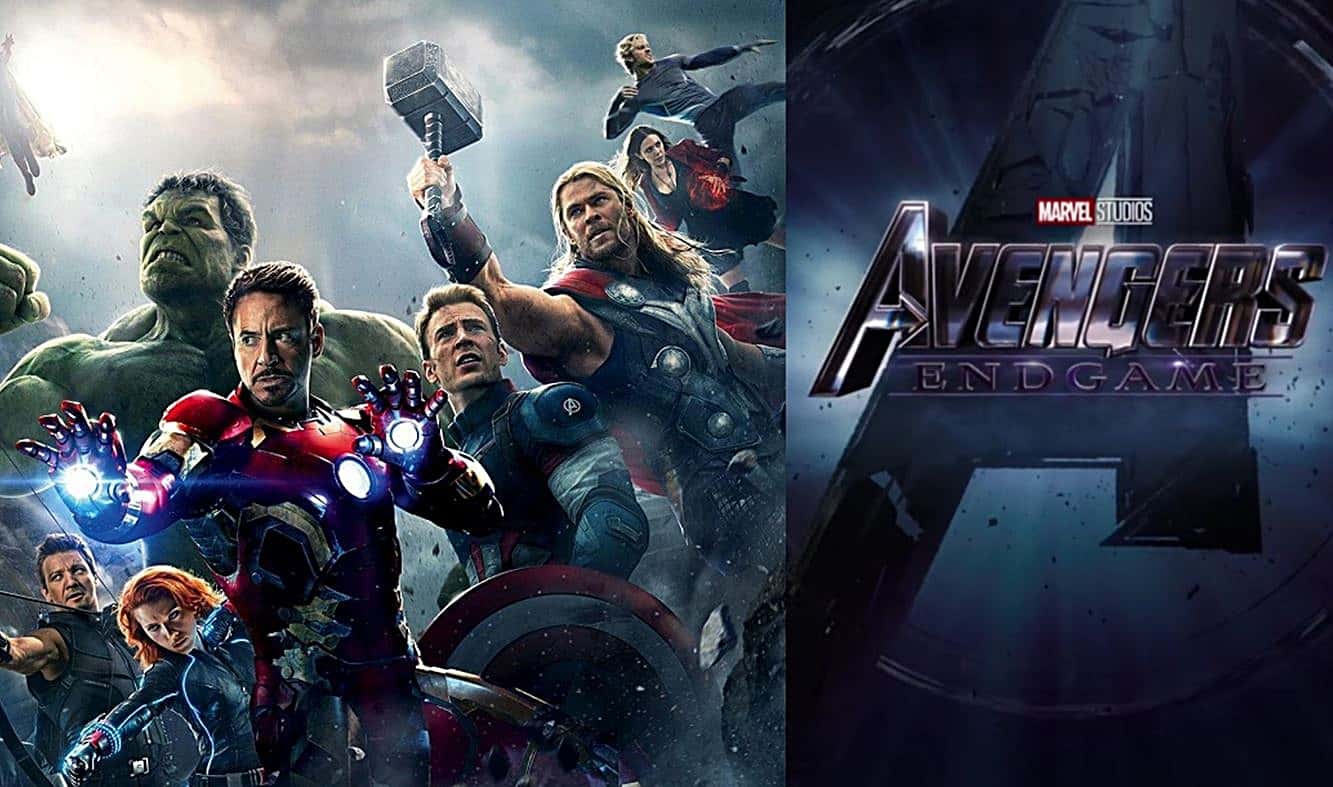
By now you’ve likely watched Avengers: Endgame, a movie that apparently every man, woman and child on planet Earth is legally required to watch. In all likeliness, you probably think it’s a very good movie. Admittedly, it does provide a worthy sendoff for many of the characters we have followed over the course of a decade, especially Tony Stark. Unfortunately, by every objective measure, Endgame simply isn’t a good movie as a whole and squanders much of its gargantuan three-hour runtime just so it can hurry up to the last 30 minutes.

The main problem revolves entirely around the hackneyed time travel story. Time travel is a very risky plot device to use because you open yourself up to an endless array of plot holes (and indeed this film does have a few, particularly one involving Captain America) and have to spend valuable minutes covering all your bases with long explanations on how your movie’s brand of time travel works. Endgame tries to brush past these intricacies by namedropping famous time travel movies like Back to the Future, with the Hulk explaining that the time travel they are using to undo Thanos’s actions doesn’t involve the “butterfly effect”, in which rearranging events in the past affects the future; it just spawns an alternate timeline that continues on its merry way while yours remains untouched. This, I thought, was such a lazy cop-out and a convenient way for the writers to get out of the corner they had written themselves into.

With half the world population dissolved by Thanos, the Avengers go find him in hopes of recovering the time stones and undoing the damage. It turns out that Thanos has already destroyed the stones, and Thor decapitates him on the spot before they have a chance to properly interrogate him. I get that this was a sort of Rian Johnson-esque attempt to subvert expectations, but to follow that up with a cliched, weak-ass time travel plot is just lazy storytelling and condemns the rest of the movie into mediocrity.

The next two hours of the movie are some of the most tedious and meh-inducing I’ve ever seen in a blockbuster of this magnitude. By the time the Avengers recover the second stone, I realized that this movie was basically now a TV show. It had no cinematic scope or sense of wonder or discovery; you’re just experiencing remixed scenes from previous MCU movies as the plot twists itself into a pretzel in order to resolve a seemingly unsolvable conundrum. In this middle act, Endgame is essentially a very long exercise in fan service and retreading its own lore. This might be fine as a Netflix series, but it does not deserve to go on the big screen.

The other major factor that exacerbates Endgame’s meh-ness is that, having killed off Thanos early on for the sake of shock value, it has no compelling antagonist for the Avengers to go up against. The movie becomes a long time-travel story with no real threat or stakes involved; the Avengers are merely trying to undo something they’ve already come to live with for five years, while at the same time seeing things in the past that make them reflect on themselves. Once you realize that it is basically a very, very long wave goodbye, Endgame feels less like an endgame and more like an epilogue.

Nearly halfway into the story, with the Avengers breezing through their time travel heist unchallenged, I was genuinely curious as to what sort of threat Endgame would conjure in the absence of Thanos. It turns out the answer was…more Thanos. And it’s not even the same Thanos responsible for the snap; oh no, this is a pre-snap Thanos from the past who hasn’t even gotten around to setting his Infinity War scheme into motion. Compared to his older self, pre-snap Thanos is a buffoonish caricature. Instead of wanting to save the world from itself by alleviating overpopulation, he’s now a cartoon villain who wants to destroy ALLLL life as we know it, and as if that wasn’t cliched enough, he adds that he will enjoy doing so. How do you go from the Infinity War Thanos, a surprisingly complex villain with complex motivations and ambiguous morality, to this? When the climactic final battle rolls in, it feels like a cheap, obligatory, tacked-on excuse to have the entire MCU cast do battle against a generic bad guy, with none of the weightiness of post-snap Thanos. There’s even an eyeroll-inducing feminist empowerment moment in which all the female superheroes conveniently converge on one spot of the gigantic battlefield to do this tag-team girl power ass-kicking. If that doesn’t tell you this final battle is little more than fan service than a meaningful part of the story, I don’t know what will.

Endgame could have been a lot better if they did away with the idiotic time travel story and instead went for a more conventional but effective route, with the Avengers hunting down post-snap Thanos throughout the movie. He is far and away the most well-written and formidable villain in the MCU, and it’s such a waste the writers elected to kill him off like he was nothing. The Last Jedi did a terrible job at this; what made the Endgame writers think it would work for them?

The best thing I can say about Endgame is that, once again, Robert Downey Jr. outshines everyone as Tony Stark; by far the most entrancing, witty and charismatic superhero of all time. Because he’s so relentlessly funny, the moments when Stark actually gets serious, especially when it concerns his family, are some of the finest moments in Endgame. The bit where he hugs his dad, I will admit, stirred something in me. The fact that Stark sacrifices his life at the end to save his friends is irrefutable proof that The Avengers series is and always has been about Iron Man; an arrogant millionaire playboy who gradually comes to learn the meaning of family and friendship, and offers up his own life to save them. It’s an incredible character arc on a scale never seen before, spanning eight movies, and I give RDJr major credit for that; I just wish I could say similar things about the rest of the movie. Endgame isn’t bad by any stretch of the imagination, but once you get past the hype and fan enthusiasm, it isn’t hard to see that it simply isn’t the world-shaking cinematic monument that everyone’s making it out to be.

The 21 Greatest Movies of All Time…In My Opinion (#1)

SCROLL DOWN CAREFULLY IF YOU DON’T WANT THE #1  CHOICE REVEALED BEFORE YOU’RE DONE READING THE PREAMBLE

———————-
At last, we have arrived at the #1 greatest movie of all time (in my opinion). Before we go on, I should explain something. Alien is my favorite movie of all time, but when it comes down to the literally greatest movie of all time, every single aspect of it, be it narrative, cinematography, set design, sound design, or soundtrack, must have a degree of grandiosity and scale that befits such an accolade. It can’t just be a claustrophobic story of an alien slaughtering a small group of people on a ship; there needs to be a degree of epic-ness to the movie in question for it to be called the greatest of all time. Every facet of its design can’t just be well executed; they must also explore the capabilities of the film medium to their maximum potential. So with that in mind, here is, at last, what I consider to be The Greatest Movie of All Time:


1 – 2001: A Space Odyssey (1968)

A scene from Stanley Kubrick’s “2001: A Space Odyssey.” The groundbreaking movie has been re-released 50 years after its debut in 1968. (Warner Bros.)                                 A scene from Stanley Kubrick’s “2001: A Space Odyssey.” (Warner Bros)

Literally half a century after it was made, not one of the tens of thousands of movies put out since 1968 has come close to matching the transcendental storytelling of Stanley Kubrick’s 2001: A Space Odyssey. This is a spectacular work of art unlike anything, be it a book, movie, painting, or song, that has ever been crafted by human hands, with a story as expansive and grand as one’s imagination can muster.

2001 A Space Odyssey (1968) by Stanley Kubrick

I first watched 2001 with my high school friends, one of whom had the DVD. Initially, I was confounded by it and couldn’t make it through the 142-minute runtime without catching some serious Zs. The agonizingly slow pace, the near-absence of dialogue, and the minimalist storytelling style were such a shock to my system that I think my mind’s instinct was to outright reject the movie. Despite that, a small part of me felt that, in spite of my confusion, I was watching something profound and unlike anything ever put to film. A year or so later, I had my own copy of the DVD and after two or three attempts, managed to watch 2001 in its entirety in one sitting for the first time. They say that humans can only use 10% of their brains’ capabilities. After watching 2001, I felt as if my brain unlocked an extra 20%.

From a technical perspective, 2001 was incredibly well researched and prophesied a number of technologies that today are synonymous with human development. Keeping in mind that this movie was made before the 1969 Moon Landings, 2001 accurately depicted the surface of the moon and the physics of space travel. It also predicted the advent of video calling, electronic tablets, in-flight entertainment, suspended animation, and space robotics.

One of the most memorable aspects of 2001 is its soundtrack, which uses classical pieces like The Beautiful Blue Danube and Thus Spoke Zarathustra. You’d think that these pieces were composed specifically for the movie, because they sync up with the majestic space sequences in ways that defy description. Another exceptional piece of music is the monolith song, aka György Ligeti’s Requiem, which plays whenever the characters encounter the mysterious alien monoliths. The song literally consists of a female and male choir singing a rising crescendo that can be described as terrified shrieking and humming. It’s one of the scariest things I’ve ever heard and does wonders to convey the vast, unknowable nature of the alien beings behind the monoliths.

2001‘s slow and minimalist style can be an acquired taste for most. Long, uninterrupted takes of spacecraft docking and astronauts floating through space dominate the movie, and there are virtually no dramatic outbursts from any of its actors (unless you count the apes from the opening chapter). It can seem off-putting until you realize that 2001’s visual style centers around the concept of beauty; of marveling at something so magnificent to the eyes that you savor every second it is on-screen. This is a movie with a richly detailed plot beneath its surface, but it would rather you take it in as a sensory experience as much as a mental one.

Then we have the special effects, which are jaw-dropping, especially when you realize this was 1968. Everything, everything was accomplished through practical means. The spellbinding sequences of astronauts David Bowman (Keir Dullea) and Frank Poole (Gary Lockwood) defying gravity as they move about the Discovery were accomplished by strategically rotating the set around the actors while they simply walked on the spot. The cameras filmed from a fixed position, giving audiences the illusion that the actors were walking up the walls and on the ceiling. Another example: The sequence in which Bowman flies through an airlock in zero-gravity was accomplished by suspending the actor by wire and having a stagehand jump off a platform with the wire in hand, causing the actor to “fly” through the airlock. One more example: the famous hyperspace sequence was, hard to believe, not done with any computers. It instead utilized slit-scan photography of high-contrast images, and filming various swirling chemicals in slow motion.

The special effects people of 2001 were not CGI artists working entirely behind computers; they were more akin to magicians, using clever trickery and deceptively simple solutions that had more to do with engineering and physics than computers. Because of this, 2001 can never, ever be beaten by any CGI-driven film, not even Christopher Nolan’s Interstellar, because everything in it is REAL.

The story of 2001 is about as grand as can be, and surprisingly optimistic. Rather than focus on deep characterization or intense dialogue, the story zooms out to tell a tale of human evolution and the technologies man must struggle with to get to the next stage. Nowhere is this more apparent than the transition between the opening Dawn of Man chapter and the Clavius chapter. In a single jump cut, the film transports us millions of years forward to show how humans evolved from smashing skulls with animal femurs to threatening each other with orbital nuclear weapons platforms. It turns out that man’s evolution is triggered by the presence of alien monoliths, left by a sentient race so advanced that it transcends 3D space in a manner beyond human understanding. For such a story to exist in 1968 is mind blowing, and it still is a far more original concept today than the vast majority of science fiction movies.

2001: A Space Odyssey is by far the most epic of film narratives. It features an AI gone wrong, hyperspace travel, great mysteries of benevolent aliens in 4D space, and the creation of amazing technologies. Above all, it is a movie that tells a story that seems impossible to tell: the journey of all humanity from the deserts of prehistory to an existence beyond space and time. It is also a technical masterclass on special effects, sound design, and cinematography. To this day, no other filmmaker or film studio has had the creativity or the balls to craft something so ambitious, so highly original and so disruptive to the most inherent concepts of film, storytelling and art in general. That so many people today have neither the patience or ability to comprehend this movie is a sad testament to how major film studios have eroded away general audiences’ creative tastes with an avalanche of shitty superhero movies, reboots, remakes, sequels, and, perhaps worst of all, soft reboots. If you haven’t seen 2001 before, I challenge you to seek it out however way you can, sit your ass down for a good 142 minutes, and watch it with a very open mind. I promise you won’t regret it.

That just about rounds out my 21 favorite movies of all time; hopefully now you have a few movies to add to your “To Watch” list. Next up, the 5 Shittiest Movies I’ve Ever Seen!

The 21 Greatest Movies of All Time…In My Opinion (6-2)

We’re now at the final stretch of the 21 Greatest Movies of All Time (in my opinion). These next few films are especially near and dear to my heart and have been hugely influential in helping me realize what kind of art I gravitate towards. They are virtually flawless and embody all the reasons I go to the movies. So here we go now…

6 – Heat (1995)

Street Shootout Heat - YouTube

Michael Mann’s Magnum Opus is without any doubt the greatest crime story ever told. It stars both Robert De Niro and Al Pacino. It has the most realistic, well choreographed shootout in film history. Its epic three-hour runtime includes big heists, police surveillance, corporate betrayal, familial trauma, and massive gunfights.

Unlike other crime epics like The Godfather, Heat is still very much a sleek, modern movie that feels like it could still take place today. The film has a steely-bluish tint throughout. Electric guitars and synthesizers permeate the score. Characters on both sides of the law speak quickly and professionally, with distinct personalities that suggest enormous depth, even if the movie doesn’t have time to focus extensively on them; they just exude coolness with every movement and every word. This is what is at the heart of Heat: The immense professionalism of both cops and robbers in the modern urban battlefield, whose zealous dedication to the job wreaks havoc on themselves and their loved ones.

The centerpiece of Heat is its jaw-dropping climactic shootout in the streets of downtown Los Angeles. It was filmed with an eye towards accurate tactics, with the bank robbers using suppressing fire to cover each others’ movements while the police attempt to flank them. The sound of the gunfire was also recorded “as-is” with no effects foleyed in, and the cacophony bouncing off the surrounding buildings makes Heat‘s shootout sound terrifyingly loud. Technical perfection aside, the shootout is as great as it is because by the time it happens, we are completely invested in just about every character who is involved. Whether it is McCauley, Hannah, Shiherlis (Val Kilmer), or Cherrito (Tom Sizemore), every death and injury hits hard because we have come to fully understand these characters inside and out. It isn’t just an obligatory gunfight between cops and robbers; its the confrontation between two unstoppable forces that we have all been waiting for.

The mark of a truly astounding movie is that it’s so detailed and nuanced that you notice new things every time you watch it. Heat may be almost three hours long, but every second of it is peppered with bits of dialogue, small gestures and shifts in posture that you might not notice at first, but reveal so much about its characters and storyline. I’ve seen Heat a number of times, and every single time I watch it again it feels fresh because of that. I couldn’t ask for much more out of a movie.

5 – Black Hawk Down (2001)

Black Hawk Down Wallpapers

I was too young to watch Black Hawk Down in theaters when it came out, which is why my friends and I hatched a plan involving fake IDs to get into the theater. It worked, and I don’t for one moment regret the decision. This is my favorite war movie of all time and one of maybe three movies that have nearly moved me to tears.

What Black Hawk Down does incredibly well is to accurately portray the Battle of Mogadishu from two distinct perspectives: The violent mayhem experienced by the Army Rangers and Delta Force operators on the ground, and the strategic and bureaucratic  clusterfuck paralyzing the military commanders up high. This is a masterfully paced and edited depiction of real-life chaos, and repeat viewings reveal subtle hints that the operation was doomed to fail from the very beginning.

From a sensory perspective, Black Hawk Down’s visual and sound design are unmatched by any war movie, aside from maybe Saving Private Ryan. Of particular note is the approach sequence in which the American forces fly into Mogadishu in their Blackhawks and Little Birds. It’s a sequence so astonishing that you can’t even blink. As the choppers approach the mission area, the sounds of the world fade away as Hans Zimmer’s  soundtrack flows in, electronic percussion imitating the sounds of the helicopters’ rotor blades and a sense of dread marches in to the sound of thunderous toms. The camera switches focal lengths and uses contrasts of color to great effect; one moment, the choppers look like shadow dancers in perfect unison with one another, and in the next shot, they resemble an enormous flock of birds spread out across the skies.

The all-star cast includes Josh Hartnett, Tom Sizemore, Orlando Bloom, Tom Hardy, Ewan McGregor, Jeremy Piven, Eric Bana, Jason Isaacs and William Fichtner. Yet, you don’t even realize half of them are in the movie because they look indistinguishable with their combat gear on. More so than any other war movie, Black Hawk Down has no real main characters and instead portrays collective heroism from the men on the ground, all of whom were willing to die for one another. Case in point: the scene with Gary Gordon and Randy Shughart defending a downed Blackhawk against waves of Somali gunmen. It’s extremely difficult to watch, but it’s an extraordinary portrayal of two men who willingly went to their deaths in order to give their brother a small chance at survival.

Someone once said women cry to Titanic, and men cry to Black Hawk Down. How true.

4 – Zodiac (2007)

"Zodiac" (2007). David Fincher

During my college years, my friends and I walked into a screening of Zodiac fully expecting it to be a slasher movie. What we got instead was a 2-and-a-half hour detective story that is extremely light on the slashing. My friends walked out of the theater, thoroughly bored. I stayed, and Zodiac became one of my favorite movies of all time.

Zodiac isn’t so much about the real-life killer who terrorized North California as it is about the decades-long investigation to find him. What exemplifies this movie is that it successfully tells the true story of the Zodiac manhunt without much sacrificing of accuracy, while at the same time maintaining a compelling narrative. A lot of this has to do with the performances of Jake Gyllenhaal, Robert Downey Jr. and Mark Ruffalo, as well as David Fincher’s flawless direction.

Initially, the film portrays the Zodiac’s killing spree and the turning of gears that gave life to the investigation. Once it gets into the swing of things, Zodiac takes on a hypnotic quality, slowly but surely drawing you into the investigation along with its characters. You find yourself trying to work out the identity of the killer, and when a supposed slam-dunk in the case turns out to be a dud, it’s impossible not to feel the same frustration as the detectives.

Casual moviegoers will be exhausted by Zodiac while cinephiles will be entranced by it; something that, in a metaphysical way, imitates the point of the movie. The real-life Zodiac investigation was a frustrating bottomless rabbit hole of potential suspects, loose threads, and deflated expectations. Those who were peripherally interested in the case gradually lost interest, while those who most actively investigated it only became more obsessed. The Zodiac killer wasn’t memorable just because he killed some people and got away with it; it’s because he stirred up the imaginations of investigators, journalists, armchair detectives and scholars, and profoundly affected their lives without him having to so much as lift a finger.

Zodiac is 1000% a detective story in the purest sense, and doesn’t require shootouts, chases or gratuitous violence to stay interesting. It’s a story about the thrill of the investigation, the addictive sensation one gets when one puts the pieces together, and, unfortunately, the disappointment that slams into one’s face when real-life doesn’t fit the narrative. It is by far the most unflinchingly realistic story of its kind, and for that it fully deserves its #4 spot on my list.

3 – The Insider (1999)

The Insider (Blu-ray) : DVD Talk Review of the Blu-ray

At the #3 spot is a movie that, unlike pretty much every other movie on this list, has no violence, no deaths and no injuries; not even so much as a shoving match to drive up the action. Michael Mann’s The Insider is a ferociously compelling drama based on the true story of the Brown and Williamson/CBS scandal with some of the most incisive dialogue and arresting performances put to film.

The Insider, at its heart, is a classic David versus Goliath story, with Russell Crowe playing Jeffrey Wigand, ex-Vice President of the Brown and Williamson tobacco company, who goes up against his former employer to expose a public health hazard to CBS News. Instead of swords and slings, the battle is fought with lawsuits, court depositions, non-disclosure agreements, and something called tortious interference. Like many of my other favorite films, The Insider sits upon a bedrock of exhaustive research on the part of the filmmakers to ensure their story and dialogue are accurate and authentic.

In keeping with Mann’s flair for accuracy, The Insider does not do a whole lot to artificially heighten its drama. There’s no scene of Wigand punching out a B&W executive or someone throwing a brick through his living room window. At its most action-packed, Wigand uses a golf club to mildly threaten a man he thinks is trying to intimidate him. I mean shit, the movie even states outright in its end credits that one of its scenes (in which Wigand finds a bullet in his mailbox) was added for dramatic effect. Instead, what we get is the real-life drama of a man under 360-degree assault from some of the very people he’s trying to help by exposing B&W’s dangerous practices. Even worse, the movie shows how CBS News, who are supposedly in the business of informing the public, intentionally sabotage their own 60 Minutes program when they realize publishing Wigand’s information could potentially open them up to a legal disaster.

The performances are some of the best I’ve ever seen. There are way too many excellent scenes to list here, but the most memorable one by far is of attorney Ron Motley (Bruce McGill) tearing a B&W executive a new asshole, screaming “WIPE THAT SMIRK OFF YOUR FACE!” in such a terrifying manner that you will surely be silenced by it alongside the poor bastard getting yelled at. Christopher Plummer also brings enormous gravitas to the movie with his portrayal of Mike Wallace, a veteran journalist whose idealized vision of CBS is brought crashing down when he sees the insane degrees to which they try to cover up the truth.

The Insider is an extremely rare and well-told story of corporate and media malpractice, the kind of which still happens today, that we should all be aware of. It isn’t about a war in a distant country or space aliens or serial killers in a small town. This is happening in the society we live in and affects our lives quite directly. It isn’t just a film; it’s a warning.

2 – Alien (1979)

Alien (1979) - Cinespia | Hollywood Forever Cemetery ...

1979 is the year science fiction and horror were changed forever by a single movie. Alien isn’t just a profound landmark film with a great story and great actors; it’s the first monster movie that reaches into our subconsciousness and defiles the very thing that defines all life.

One of the great things Alien does is bring a working-class vibe to science fiction. There are no sleek space ships or fancy space suits; the Nostromo and its crew are basically a giant space 18-wheeler being driven by grizzled blue-collar joes who like to fuss over bonuses, read dirty magazines, and get into arguments a lot. It does wonders to make the characters likable, and just like The Thing, it isn’t hard at all as a viewer to experience the roller coaster of wonder and horror alongside them.

The xenomorph that hunts and kills the crew will forever be the greatest monster movie ever created and it isn’t because it bleeds acid, or that its the perfect organism. It’s because every facet of its design is designed to disturb us subconsciously. Think about it. Its life cycle begins when a facehugger is birthed by a vagina-looking egg. The facehugger thrusts an appendage down one’s throat. After its violent chest-bursting birth, it’s head resembles a penis and it kills by thrusting another appendage from within its mouth into one’s skull. The xenomorph is a horrifying perversion of the very things that gave us life, and it exists solely to give us the worst of deaths. It’s hard to think that there could be a creature more terrifying than that.

I’ve seen Alien a number of times since I was young, of course, and as an adult, one of the things I picked up on is the complexity of its secondary villain, Ash the android. After being exposed by Ripley as working against the crew to protect the xenomorph, Ash tries to murder her by, of all things, rolling up a magazine and ramming it down her throat. At first, I and I assume many others thought this was strangely comical but figured it was because Ash was in the process of a major malfunction. The more likely explanation is that Ash, an android, is trying to both act out a deep-seated rape impulse on Ripley, and imitate the creature he so desperately admires by doing to her what it did to Kane. There is such a shocking level of depth to this movie that even the secondary antagonist is miles beyond most other movies’ main antagonists.

Alien also features some of the most distinctive set design ever. The clear highlight is the 70’s style, boxy clunky-junky design of the Nostromo. The ship has two distinct looks: the pristine white and plastic-y living and medical quarters, and the gray, metallic and angular look of the bridge and engineering deck. Even the sounds of the ship are ear-catching, whether it’s keyboards click-clacking, doors hissing open and shut, or even just the air venting. The scene where Ripley activates the Nostromo’s self-destruct sequence, for example, is just pure ASMR.

For a film of such tightly constrained scope, Alien broke so much ground not just by revolutionizing genres, but filmmaking and storytelling concepts as well. It introduced the greatest female protagonist of all time, Ellen Ripley. It brought a relatable cast of characters to the table. It created a movie monster that set the standard for all other movie monsters. It fused science fiction and horror together for the first time. The list goes on and on, but for me, Alien is the starting point of my obsession with its amazing universe that drove my imagination throughout much of my youth.


The 21 Greatest Movies of All Time…In My Opinion (11-7)

Update: I realized that there was one movie I had forgotten to include in this list because I hadn’t seen it in a long time, so this list is now the 21 Greatest Movies of All Time. If you have a problem with that, you can speak to my lawyer. Anyway…

We’re getting closer to the home stretch of the 21 Greatest Movies of All Time (In my opinion), and when you’re done reading this chapter, you’ll notice that most of the movies on this list so far are quite modern, being from the 90s to 2000s. Although the 1940s to 80s had plenty of classics, I’ve found that the 90s to 2000s were when cinematography, sound design, and visual effects became sophisticated enough to match the highest levels of storytelling. With that in mind, let’s get on with it.

11 – Blade Runner 2049 (2017)

BR2049

Blade Runner 2049 is the rare sequel that expands and improves on every aspect of its predecessor. Of course, when you have both director Denis Villeneuve and cinematographer Roger Deakins involved, it’s hard to imagine this movie would be anything less than near-perfect.

The plot isn’t exactly high-concept and does require viewing of the first Blade Runner to fully appreciate. Yet, beyond the scope of its connect-the-dots detective story is a larger narrative that is signature to the cyberpunk genre. 30 years after the events of the first movie, the world of Blade Runner 2049 is choked in dust and smog, scattering light into the once deep black night sky of Los Angeles. The human inhabitants are but a simulacrum of their former selves, having descended into apathy and unbridled hostility for replicants. Meanwhile, many of the replicant characters, especially K, are trying to achieve the humanity their creators have long forgotten about, whether it’s having a holographic girlfriend who serves holographic steak dinners while dressed as a 1950s diner waitress, photographing virtual forests as a hobby, growing crops, or indeed, giving birth. It is through these glimpses of humanity that the movie never loses its soul amid its relentlessly grim surroundings and the plot drives along its 160-minute run time without becoming dreary.

However, it is the unity of cinematography and soundtrack that cements Blade Runner 2049 as one of the greatest movies of all time. Not since 2001: A Space Odyssey has a movie been so visually and aurally hypnotic. Every – single – shot of this movie is mind-bogglingly perfect, whether it’s K flying over the giant, endless dystopia of 2049 Los Angeles, the crushed black shadows cast within Wallace Headquarters, the sterile gray walls of K’s apartment, or the brown and orange wasteland of Las Vegas. This movie could have been four, five hours long and I’d still watch it; it’s like giving your eyes a reward.

The soundtrack is nothing short of godly, especially to a musician like myself. Each of the movie’s four main settings has its own motif: the aggressive, electronic soundscapes of Los Angeles, the haunting throat singing of the Wallace Corporation, the minimalist ethereal pads of San Diego, and the thunderous booms of Las Vegas. The theater I watched this in was literally shaking during certain parts of the soundtrack, as composers Benjamin Wallfisch and Hans Zimmer somehow managed to conjure frequencies that one could feel in one’s bones. One particular element of the soundtrack that recurs sounds like a motorcycle revving through a guitar amplifier. It turns out, after some research, it’s the sound of a male choir processed through endless layers of synthesizers and then run through a pitch bender.

It may be a recent movie, but there’s little doubt in my mind that Blade Runner 2049 will stand tall among the classics that have come before it as one of the high points of what cinema can achieve through sight and sound.

10 – There Will Be Blood (2007)

TWBB

I’m sure if you asked the average know-nothing if they’ve heard of There Will Be Blood, they won’t know what you’re talking about unless you mention the scene pictured above. Aside from the sugary imagery it conjures, it’s a scene that surprisingly sums up the movie as a tale of the single most corrupting force in human history, greed, and the bottomless depths people will plumb in its name.

TWBB is driven by two powerful figures in film: Director Paul Thomas Anderson, and probably the greatest actor of the last 30 years, Daniel Day-Lewis. The movie is generally regarded as a drama, but the darkness that drives protagonist/antagonist Daniel Plainview to murder, lie, and steal from everyone around him, including his own son, pushes the film close to the boundaries of horror. After all, the greatest of horror movies are often about the evils that lie within the hearts of men, rather than the evils that dwell in the ether.

Taking place during the Southern California oil boom of the early 1900s, the story depicts a multitude of characters searching for wealth, with Plainview’s success in mining oil being the catalyst for their greedy impulses. Chief among them is Eli Sunday, an evangelical preacher in the oil-rich town of Little Boston. Both Plainview and Sunday become intertwined in a tornado of deceit, with both characters lying to others while themselves being lied to. At varying points, both characters even wield the rhetoric of religion over the gullible townsfolk as a means to their selfish ends.

Yet, what separates Plainview is the same thing that allows him to succeed where others fail: his hatred of people. As he explains, he doesn’t just want to succeed, he hates people who try to succeed over him and enjoys watching his competition fail. Hate is what drives There Will Be Blood, and it is unlikely any other director-actor duo could make such a movie even remotely palatable, let alone one of the greatest of all time.

9 – Aliens (1987)

There’s no way Aliens can be excluded from this list. Ever since I watched it on VHS and the extended cut on Laserdisc in the 90s, Aliens undoubtedly ignited my interest in movies for years to come.

Aliens, like many of the older films on this list, is a movie that becomes more impressive as time goes on because of the rapid race to mediocrity that is consuming blockbusters today. From a technical perspective, the distinct design of the colonial marines’ armor, pulse rifles, smart guns, armored personnel carrier, and dropship will forever inspire science fiction military movies. Aliens is also a rare movie in which the set design by itself tells a great deal of the story, as Ellen Ripley’s (Sigourney Weaver) surroundings gradually regress until she finds herself in the pit of hell itself: the Alien Queen’s nest.

And speaking of which, Aliens might just be the greatest movie to feature both a female protagonist and antagonist. When I watched this movie as a kid, all I took away was a story of space marines in a desperate stand against an alien force. Rewatching it as an adult, I see that the movie is really about two kinds of female power that have been the cornerstones of all creation: The power to nurture and protect (Ripley) and the power to reproduce (The Alien Queen).

It’s laughable how people today prattle about needing girl-power in action movies. They clearly haven’t seen Aliens. Ripley is tough and cool-headed in situations that send the marines into a panic, but that’s not why she’s a compelling female protagonist. She’s a compelling female protagonist because her maternal instinct to protect Newt drives her to insane degrees of heroism. This is all the more true if you’ve seen the extended version, in which Ripley’s daughter is revealed to have passed away while Ripley was drifting in space for 57 years. She sees Newt as a second chance to be a mother, and that emotional drive is what powers Aliens from start to finish.

8 – Letters from Iwo Jima (2006) 

Letters from Iwo Jima is not just Clint Eastwood’s finest movie, it’s also the most important war film of all time. It is a masterful depiction of the Battle of Iwo Jima from the Japanese perspective that tragically reveals that the Pacific Theater of World War II was between two countries that, under any other circumstance, would have been the best of friends.

A critical scene in Letters occurs when the Japanese soldiers capture an American soldier, Sam. He is “interrogated” by an officer, Takeichi Nishi (Tsuyoshi Ihara). Only after Nishi reveals that he has been to the United States and is friends with a few celebrities there that Sam warms up to his captor. After Sam dies from his injuries, an officer, Takeichi Nishi, searches his corpse and finds a letter his mother wrote to him. Nishi reads the letter out loud to his soldiers, who are shocked to discover that the white-skinned savage they were taught to hate is an ordinary kid like most of them. This, along with the flashbacks of General Kuribayashi (Ken Watanabe) visiting the States, is what really struck me about Letters. It’s the tragedy of an intelligent and deeply cultured people being led into an unnecessary bloodbath.

Despite this, the movie paints with an objective brush and doesn’t shy away from the savagery both sides inflicted on one another and themselves. The Japanese propensity for suicide, in particular, featured in all its unpleasant glory, with one gruesome scene of soldiers blowing themselves up with grenades upon learning that the Americans will soon overrun their position.

The actual Battle of Iwo Jima resulted in nearly all Japanese forces killed, either by US forces or by their own hand. Where Letters seals itself as such a monumental work is in finally giving voice to the thousands of Japanese soldiers who perished, and giving insight into the mindset that led to such a ferocious battle. Go watch this movie however way you can.

7 – The Thing (1982)

TheThing

Nearly 40 years after it was made, The Thing still remains the greatest practical effects monster movie of all time. It effortlessly weaves together a story of immense paranoia with astonishing, unmatched animatronics and gross-out horror to create a visual spectacle that is repulsive but impossible to look away from.

I once read a YouTube comment that asked which was the greater threat to humanity: The Thing or the Xenomorph from the Alien movies. It may seem like a close call, but the Thing is far and away the most formidable alien creature in science fiction horror. It can imitate any life form it wants, down to its personality, and use its disguise to infiltrate and sabotage human institutions. It could theoretically take on the form of a world leader or military commander and do devastating damage to whole countries. Even when exposed, it is capable of re-arranging its form on the fly in order to escape, with parts of it breaking off to hide while the main body distracts its attackers. Above all, the very concept of the Thing slowly digesting a person as it violently assimilates them is disturbing beyond anything your mind can conjure.

We get to see what a creature of this nature can do when it wreaks havoc on a small research outpost in the middle of Antarctica. Trapped in the station and unable to call for help, the researchers quickly turn on one another once they become aware of the Thing’s capabilities. More often than not, the paranoia exposes distrust that was inherent among the researchers long before the Thing’s arrival. Yet against the odds, the researchers put up a reasonable effort in their attempt to combat it. Indeed, one thing that makes The Thing so great as a horror movie is the characters are not complete idiots and take measures that befit their status as men of science. Rather than waiting to see who will be the next to die, you find yourself rooting for them, experiencing their horror alongside them, and coming to the same logical conclusions they do. In other words, your mental journey throughout the film is the same as theirs. This is one of the highest accomplishments a horror movie can aspire to, and The Thing is the rare movie that succeeds at that.

The Thing was followed by a prequel of the same name in 2011, a movie that was pretty much ruined when the producers felt that using practical effects and creature design  made it  feel “dated”. They instead layered the shoddiest CGI you’ve ever seen over all the practical effects, and what should have been a highly anticipated follow-up to one of the greatest movies of all time became little more than another reason why monster movies today just can’t reach the lofty heights set by The Thing.