The Ten Greatest Breaking Bad Moments (in my opinion) Pt 1

It’s been over a decade since Breaking Bad first aired, and even after such a span of time, it remains one of the greatest works of fiction, let alone TV shows, ever conceived. On one hand, the incredible tale of a loser high school chemistry teacher, Walter White, who transforms into a feared drug kingpin has a low barrier of entry to appreciate; you don’t need to be intimately familiar with the world of illegal drugs, police procedures or hell, chemistry, to be absorbed in the plot and its characters. On the other, the show is filled with God-tier levels of nuance, symbolism, and every other storytelling trick in the book to such a degree that repeat viewings always reveal new insights previously glossed over. This is a show in which every scene and every line of dialogue is driven by a singular purpose, all leading to one destination, and thinking about moments that stick out in Breaking Bad isn’t easy because, frankly, all the moments stick out.

With that said, after re-watching the entire series about four times and being able to thoroughly digest each and every minute of the show, I’ve managed to come up with what I think is a more informed list of Breaking Bad’s ten greatest moments. Generally speaking, this list (arranged in chronological order, by the way) eschews some of the more obvious ones that people remember, like “I am the one who knocks” and “Say my name”, and instead prioritizes moments that grew on me the more I watched them, so let’s take a look.

“Think of something scientific!” – S2E9

In the first of several seemingly hopeless situations that Walt and Jesse managed to escape from, the duo find themselves stuck in the desert inside a dead RV with no water or cellphone reception, thanks to Jesse’s negligence. Walt, already resigned to a fate of death by cancer, soon becomes content with the inevitable, viewing his predicament as punishment for the lies he’s pushed on his family. Jesse, on the other hand, is desperate to live and motivates Walt into action with one of the most hilarious and distinctly Breaking Bad-esque monologues ever:

Okay, you need to cut out all your loser crybaby crap right now and think of something scientific!”
“Something…something scientific?! Right…”
“What? Come on, man. You’re smart, alright? You made poison out of beans, yo. Alright, look, we got, we got an entire lab here, alright? How about you take some of these chemicals and mix up some rocket fuel? And we can just send up a signal flare! Or you make some kind of robot to get us help…or a homing device…or build a new battery or…or wait, no. What if we just take some stuff off the RV and build it into something completely different? You know, like a, like a dune buggy. And that way, we can just dune buggy or…”

It’s a familiar scene if you’ve watched enough movies; the proverbial “Aha!” moment triggered by a throwaway line that leads to salvation. It just works so extraordinarily well in Breaking Bad because of the contrast between Walt and Jesse, the most unlikely duo imaginable who go from cooking meth while irritating each other along the way, to having to work together in a life or death situation. As the show progresses, Walt and Jesse’s exploits take a significantly darker turn, so this sticks out as one of the show’s comedic highlights in which there are no serious consequences from their success.

“You led him right to us.” – S3E6

It’s a scene so high-stakes that the show’s own writers nearly wrote themselves into a corner when they conceived it. With Hank in search of the meth lab RV containing Walt’s fingerprints, Walt desperately tries to scrap the vehicle before his brother-in-law can get to it, only for Jesse to show up to stop him. “This is mine just as much as yours!” Jesse shouts. Walt prepares to fire back with his own retort, but the anger instantly drains from his face when he has the horrifying realization that Hank has followed Jesse to their location. What follows is the closest Hank comes in the entire series to solving the Heisenberg mystery until he reads Leaves of Grass in the toilet in Season 5. The only thing separating Walt and Jesse from total ruin is the bullet-riddled RV door, which Walt and Hank get into a tug of war over.

Throughout the show, Walt, for all his diabolical shenanigans, has always been careful about not involving his family in his business. But here he’s forced to dip his toe into the forbidden zone by getting his lawyer, Saul, to give Hank a phone call that tricks him into thinking his wife has been in a car accident. The scheme works, but, like many things Walt does, triggers a chain reaction of events that nearly costs Hank his job and his life.

What makes this scene great is that it displays Walt’s ability to survive the unsurvivable not through physical prowess or MacGyver-style ingenuity, but by manipulating everyone he knows. In this scene alone, he goads Jesse into yelling things like “This is my own private domicile and I will not be harassed” at Hank in an effort to dissuade him from breaking into the RV. He then leverages Saul to make the fake phone call, which leverages Hank’s love for Marie to send him packing. In Season 3, he taps into this skill as a desperate measure, but later in the series, he utilizes it proactively with darker consequences.

“This is a ridiculous idea.” – S3E12

Season 3 is my personal favorite season of Breaking Bad because, as the middle point of the series, it fuses together the comedic and conflicted natures of Seasons 1 & 2 with the darker and demented elements of Seasons 4 & 5. This often overlooked scene in the episode “Half Measures”, in which Jesse tries to persuade Walt to help him assassinate two of Gus’s henchmen, is the final stop in Breaking Bad before shit gets real crazy.

Things get off on a poor note when Jesse tosses a bag of blue meth on the table in the middle of a bar filled with customers. An appalled Walt quickly covers it as he asks “What the hell are you doing?” Jesse then pitches his idea of using ricin (cooked by Walt) to poison two of Gus’s henchmen, who were responsible for previously killing his friend Combo using a child gunman. From Jesse’s point of view, killing the two henchmen is the right thing to do, consequences be damned, because of their use of children to handle drugs and murder competitors. From Walt’s point of view, even if the henchmen deserve to die, there is no practical benefit to killing them; “This achieves nothing. It accomplishes…NOTHING.”

Earlier in the season, Jesse admits to Walt that he’s accepted being a member of the criminal underworld (“I’m the bad guy” as he says). Because of this, he’s got no qualms about using criminal means in pursuit of his idea of justice. Walt, on the other hand, is still stuck in the belief that he’s not “the bad guy” and that he’s doing this for his family. Throughout Season 3, he engages in one half measure after another to resolve problems while maintaining that he’s just a family man who also happens to cook meth. He outright denies any role in causing the mid-air plain collision in Season 2. He tries to salvage his marriage even after admitting to Skyler he makes meth. He sabotages the perfectly competent Gale in order to stop Jesse from ruining Hank’s career, instead of having Jesse killed.

The dialogue in this scene is a masterful example of the chemistry between these two characters. Walt’s exasperation at Jesse’s harebrained plan is hilarious, with the meth maestro trying to torpedo the idea the only way he knows how: using cold hard logic. It doesn’t work on Jesse, who is prone to letting his emotions guide his most extreme decision making. Eventually, Walt drops the most critical line: “You are not a murderer. I’m not, and you’re not. It’s as simple as that.” It’s a strange thing to say, considering by that point Walt has been directly and indirectly responsible for the deaths of quite a few people, but it drives home the point that he’s desperate to keep things from spiraling out of control with self-delusion and half measures. To that end, he follows up with his final ridiculous half measure of the season: trying to have Jesse arrested so he can calm down in prison. It’s a move that triggers the next grave development in Walt and Jesse’s descent into the meth underworld.

“Run.” – S3E12

After three seasons of trying so desperately to maintain a delusion of normalcy with half measures, Walt finally owns the choices he’s made and takes a full measure to protect Jesse: he murders Gus’s two henchmen before Jesse and them have a chance to murder each other. It’s a spectacularly violent scene and emblematic of the kind of show Breaking Bad is: a show in which established tropes of the drug underworld are usurped by the arrival of an outside, unstable factor: Walter White.

Walt doesn’t talk or act like any of the criminal characters in Breaking Bad, and his responses to the problems that crop up in that world don’t follow any particular mold. Like a violent chemical reaction, the introduction of Walt to a criminal culture that feeds on a familiar cycle of turf wars, backroom deals and brushes with the law produces unexpected results, creating a story unlike anything seen before. This scene is an embodiment of that. It starts out with a familiar setup of drug criminals squaring off in the middle of a seedy street, pistols in hand. Then out of nowhere comes Walt, slamming his goofy Pontiac Aztek into two of them before finishing a survivor off with the man’s own pistol.

Realizing that Jesse is about to be killed in his attempt to enact justice for Tomas Cantillo, Walt arrives at the point Jesse was at during their discussion at the bar. He accepts that there’s no use maintaining delusions as to who he really is, and that the extreme act of murdering the two henchmen, consequences be damned, is an acceptable action in order to save the young man who has essentially become his surrogate son.

“You might wanna hold off.” – S3E12

This for me is Walt’s most badass moment. Having willfully murdered two of Gus’s men in the preceding episode, the restraints are off and Walt is now prepared to do anything it takes to protect himself. Unfortunately for him, the time for such desperate measures comes a lot sooner than expected, as Gus decides to have Walt executed right after his protégé Gale becomes familiar with Walt’s blue meth formula.

What Gus and his chief gunman Mike don’t realize is that Walt has seen this coming, and has tracked down Gale’s address with Jesse’s help. Upon being led by Mike and Victor to the entrance of the meth lab, where he will be executed, Walt begs for his life in the most pleading, feeble manner you’ve ever seen from a man his age. “If I could talk to Gus, I can convince him ok?? Just please, pleeeaase! Please let me talk to him!!” he cries, prompting Mike to tell him to shut up. “I can’t do it,” the grizzled fixer says, unimpressed by Walt’s pathetic mewling, “I’m sorry.”

Walt suddenly has an idea…another one of his “Aha!” moments that, once again, involves leveraging someone he knows. He tells Mike he’ll give up Jesse Pinkman for a chance to speak to Gus. Mike relents and allows Walt to call Pinkman, but instead of luring the young man out of hiding, Walt instructs him to “Do it!” Mike realizes that Walt has just instructed Jesse to murder Gale, which would prevent Gus from killing Walt or Jesse, lest his drug empire collapses. “Your boss is gonna need me.” Walt sneers, his now calm voice and demeanor having transformed from a man desperate to live to the devil himself. The normally stoic Mike can’t believe what’s just happened in front of him; the chemist he always thought was a reckless, selfish man is in fact a coldly calculating mastermind.

Unlike the battle-hardened criminals he consorts with, Walt has no fighting abilities and no cadre of bodyguards on retainer. But he has something that none of them have: an extraordinary tenacity to outthink and out-strategize everyone who crosses him by leveraging friends, family, associates, and even enemies. Many of his opponents simply think he’s a desperate, selfish asshole they can simply eliminate, and every single time they wind up proven wrong, often with fatal consequences.

RPGs Are Getting Boring. Here’s How We Fix That

With the release of arguably the most anticipated thing, let alone game, in human history, Cyberpunk 2077, the Role Playing Game continues to be a dominant genre in gaming. It’s not hard to see why; with a combination of long-form storytelling, character customization and complex open worlds, RPGs allow gamers to invest themselves in the experience far deeper than a disposable 10-15 hour campaign or repetitive multiplayer. From a publisher’s standpoint, that player investment translates to more monetization opportunities that grow the game world with more activities and customization options. It’s the perfect genre for both creator and consumer, but lately the genre has been showing signs of age, with more and more publishers churning out impressive looking titles that nevertheless rehash the same design principles. The same quest giving, the same distributing of stat and skill points, and the same boring fetching and killing in worlds that do nothing but sit around and await your arrival. The situation is particularly egregious in the East, with an endless parade of indistinguishable MMORPGs filled with brainless grinding and impractically armored women. Even more straightforward genres are expected to incorporate RPG elements, such as dialogue and leveling options. With an increasingly saturated market that borrows from the same cache of design conventions, creative stagnation in RPGs is real, and the circumstances couldn’t be more ripe for some new thinking. Here are some ideas that would make for a genuinely groundbreaking RPG that pushes the genre into the next realm of creativity.

A WORLD THAT CHANGES…WITH OR WITHOUT YOUR INPUT

Many RPGs advertise vast open worlds bristling with life (or death) that you alone can change. This sounds good on paper; after all, games are at their best when they grant players the agency to have profound effects on the game world. In 2021, the novelty has worn off and many of these open worlds are little more than glorified theme parks with animatronics that re-enact the same routine day after day. Nothing will ever change. The town with the ghoul problem will never do anything about it until you decide to, and even if you don’t, said ghoul problem will ever manifest into something serious until, perhaps, the “where they are now” sequence once you complete the game.

Here’s an idea: how about an open world that can change independent of your actions? What if the town with the ghoul problem hired an NPC mercenary to deal with it should you choose to ignore it after a certain amount of time, closing off the quest permanently? What if through an RNG roll, said NPC mercenary was killed in the process, inadvertently provoking the ghouls to swarm the town and massacre everyone, opening up a new series of quests that you wouldn’t have access to had you dealt with the ghoul problem?

A truly immersive game world is one that feels alive, and not one that only comes to life when you insert coins into it. This means that, while you might be spending time in one part of the world, events would be taking place in other parts of it that you have no control over. NPCs might migrate to new towns or even get killed. Towns might undergo changes in leadership, build new structures, and stores might flourish or go out of business. All without your input. Feeling a sense of smallness in a vast world isn’t just about size, but control as well, and ironically by removing some control over the game world, the actions you take that can in fact alter the game world feel much more meaningful as a result and not just an obligatory part of the game.

RETHINKING QUESTS

Nothing screams glorified theme park with animatronics like an NPC whose sole purpose is to stand around all day and bestows upon you a quest to fetch his prized family heirloom, the location of which he conveniently marks on your map. You proceed to the location and find the heirloom, returning it to the owner who rewards you. This is an archaic method of giving players things to do. What if, instead of having blips on the map that indicate a quest giver, the very act of getting the quest was itself a quest that players had to discover by paying attention to the world around them? What if you had to gain a character’s trust or build some rapport with them before they trusted you with such assignments?

Another aspect of quest giving that needs to go away immediately are “Activities”; essentially copy/paste quests of varying categories that are scattered across the world. Go here for an assassination mission. Go there for a racing mission. The biggest offender of this is Ubisoft, who for over a decade have been applying the same tiresome open world formula of having one main quest and hundreds of sidequests that, rather than having their own unique narratives, are simply the same rinse-and-repeat activities that you tire of after the 20th variation.

The best kinds of quests are the ones players give themselves when they connect the dots on what they need to do in order to advance in the game outside of simply grinding. This will require careful world design, with precious tools and resources located in very specific and perhaps remote areas, as opposed to simply acquired by murdering the nearest gang of enemies. One game that does this well is STALKER: Shadow of Chernobyl. Many of the structures and areas in the game are completely devoid of useful items. However, in order to navigate past the exceedingly dangerous areas of the game, you need weapons and armor. Surveying the land, you see a structure in the distance that looks like a military installation. Since it’s likely protected, you elect to go in at night so you can sneak in under the cover of darkness. That right there is a quest, and it came entirely from you, and not a scripted NPC.

One of the greatest moments in gaming was onboard the 747 in the original Deus Ex. You are tasked with killing a terrorist leader by your overzealous instructor, and the game makes you think you have a choice between either killing the guy or letting your instructor do it. However, what many players didn’t realize at first is that there is a hidden third option: You can kill your instructor in order to prevent the execution of an unarmed prisoner. This is what quest-giving should be like: having a strong narrative and world design that allows players to come up with their own objectives and solutions, and go “Wow, I didn’t know the game would let me do that and even acknowledge it.”

NO MORE HYPERSPACE INVENTORY

One big reason I just can’t immerse myself in most open-world games is how generous they are with how much you can carry. In Cyberpunk 2077, for instance, you can carry up to 200 pounds of stuff, with no size restrictions. This means you could be lugging 200 pounds of assault rifles on your body, which is literally impossible. It’s hard to immerse yourself in the world when you open your inventory and see an entire library of crap that no human being could possibly carry, but most games make this concession because, for the sake of entertainment, you are expected to face off against numerous enemies and other challenges that would necessitate having plenty of gear.

A truly immersive inventory system would factor in both weight and size. For example, you wouldn’t be able to lug around five assault rifles, even if you were under the weight limit, because you don’t have the space to do so. Conversely, you wouldn’t be able to carry around a stack of gold bars, despite their small size, because they would take you over the weight limit.

One of the great joys of any RPG experience, especially a survival RPG, is defining not just your character, but your inventory as well. Many games pride themselves on having worlds with scarce resources, but they forget that a skilled player can gradually accumulate a vast repository of weapons and gear that they carry everywhere. Choosing what to bring and what to discard should be just as important as how you define your character.

YOUR ENEMIES ACTIVELY HUNT YOU

One idea that I really like but don’t see enough of is that enemy characters can take the initiative and actively seek you out as part of their own quest. The notion that actions have consequences is criminally underserved in RPGs, and in many cases you can gleefully slaughter hundreds of enemy faction members with little consequence besides them imposing penalties on future dealings with them. In The Elder Scrolls: Skyrim, killing too many members of certain factions can trigger bounty hunters to come after you. This sounds good on paper, but in practice it amounts to a randomly generated enemy NPC awkwardly trying to “sneak” by crouch-walking up to you in plain sight…during the day. In Fallout 2, you would start getting random encounters with squads of bounty hunters. This is a better, more realistic idea, but at the end of the day simply amounts to the addition of a specific type of random encounter.

Red Dead Redemption 2 comes very close to this idea. As you progress through the story, rival gangs that you previously inflicted death on will set up ambushes at specific points of the world. You could be riding on a road when suddenly a gang of O’Driscolls would pop up from behind a nearby hill and open fire on you. The best iteration of this idea would combine Skyrim and Red Dead’s concepts: organized opposition that seeks you out in more ways than one. What if, besides the usual physical confrontations, the bar that you frequently drink at spawns an assassin who poisons your food and drink? What if a call girl that you pay for a good time turns out to be an assassin who kills you if you don’t pay attention to details in the environment?

RPGs are big into empowering you as a legendary hero who strolls into town and kicks ass and takes names, but they rarely account for the negative long-term consequences of all that killing you do. The idea that, as you level up and build your reputation in the world, you must also be more vigilant for threats that actively seek you out, is something that would give players investment in what is becoming a more banal activity in many RPGs.

NO MORE FUCKING STATS

It’s a staple of all RPGs, the idea of item stats and character stats that allow your character to move faster, shoot better and take hits stronger. Having to look at your character’s stat points as if he/she were a robot with built-in monitoring systems to tell you how much poison resistance or critical hit chance he/she has was fine back in 1990s and 2000s, but today it is an unnecessary time sink. Having to constantly switch out the same type of weapon every half an hour because you stumbled upon one that does 5 points more damage than your current one is mind-numbing. Stat scrutinizing in RPGs is a distraction from immersing oneself in the game world; a holdover from the days of pen and paper RPGs. Why is it still a requirement for RPGs to have this feature in the 2020s?

A more unique and intuitive way to handle character build is for specific attributes to improve based on how you play WITHOUT any of the detailed real-time updates (ie “You gained 1 point in athletics” a la The Elder Scrolls IV). Players would instead have to pay attention to their character’s performance to notice these changes. They could then go to an NPC and undergo tests that would produce different readouts of their character build. This would be a great way to integrate game systems and game world together, and it would give players a sense of excitement as they anticipate what their character readout will say based on how they have played so far. Similarly, instead of looting very nook and cranny for a rare drop, weapon and armor upgrades can be best handled by seeking out increasingly skilled armorers or gunsmiths, allowing you to invest more deeply in a smaller pool of gear rather than having a revolving door of them. This spreads out the upgrading experience over a more meaningful and narrative driven manner rather than the loot-based design that has already outstayed its welcome.

As you can probably tell by now, all these ideas are designed to drive RPG design closer to how things are in the real world. At the end of the day, the goal of any RPG is to maximize immersion so that players feel invested in the experience. As game production values become more lifelike, the mechanics that drive gameplay must also become more lifelike in order to deliver what so many games aspire to but rarely ever achieve.

Cyberpunk 2077: A Ferrari With No Doors

More so than any other game in history, Cyberpunk 2077 is an abject reminder that, for all the technological sophistication of videogames today, greed and mismanagement still remain the biggest obstacles preventing the industry from advancing into uncharted waters. In the eight years leading up to its release, it really looked as if this gargantuan RPG from CD Projekt Red was too impressive to fail; the city looked amazing, the gameplay trailers were phenomenal, and of course the developer’s track record was immaculate. As detailed by a Bloomberg report, Cyberpunk turned out to be yet another classic case of a triple-A game with a spectacular marketing campaign, but behind the scenes was barely being held together by overworked developers and ruthless upper management. We’ve seen this many times before with publishers like EA, Ubisoft and Bethesda, but few imagined that CD Projekt, long regarded as a bastion of integrity in an industry awash with greed, would allow themselves to succumb to this sickness.

It’s important, however, to establish that Cyberpunk 2077 is not a bad game, or even a mediocre game. It is a good game with a breathtaking visuals, versatile combat, and a very engaging story. The problem is that Cyberpunk was supposed to be a great game; a game that would take the open world RPG into the 2020s. I’m not talking about the bugs; from Vampire: The Masquerade to Skyrim to Red Dead 2 and now Cyberpunk, it’s been established quite well at this point that it’s virtually impossible to launch a massive game like this without a slew of bugs. No, it’s not the bugs that are the problem with Cyberpunk, it’s the fact that there are so many gaping holes in the design of the world. Where’s the public transportation? Why is the police system utterly pointless? Why is the pedestrian and driver AI about 20 years outdated? Why are so many buildings inaccessible? Why are there no NPCs on motorcycles? Why is there no mechanic where you can repair, upgrade and customize your vehicles? Why, in a city full of reflections, is your character the one and only thing that never appears in any reflective surfaces? Why, for the love of God, is there still no “Walk” button for mouse & keyboard setups two months after launch?

Cyberpunk 2077 is like a Ferrari that drives fast as you expect it would, but is also missing the air conditioning, the radio, one of the doors, and the hood. CD Projekt have boasted in their marketing that they have crafted the most immersive open world ever, but a few hours in Night City quickly disproves that notion. While the sound and visual design of this game is immaculate, I found myself doing quite a bit of heavy lifting in immersing myself in world. For example, within literal seconds of exploring Night City for the first time, I was greeted with an endless parade of NPCs driving into a road barrier in front of me, ripping their cars apart thanks to their inability to negotiate a left turn. When driving to specific locations, I was again taken out of the experience when I realized there were no parking spaces anywhere. The only option was to park in the middle of the street, prompting a massive traffic jam of brainless NPCs who couldn’t understand the concept of driving around a stopped vehicle.

Another hyped aspect of the game was the level of character creation and ability to define your role in Night City as a Nomad, Street Kid or Corpo. Much ado was made over how the character creator was so detailed you could adjust the size of your character’s dick. It turns out this, along with the many Role-Playing aspects of the game, were red herrings. You can adjust the size of your dick or breasts, but can’t adjust any aspect of your body shape or height. You can choose between three character backgrounds, but aside from the first half-hour of the game and a few extra lines of dialogue here and there, this has no bearing on how the story will play out. Dialogue design is also sparse for a game of this scale, with generally only two dialogue options to react with, neither of which feel particularly distinct from each other. For a game that bills itself as an RPG, it’s really light on the character building.

The more I play Cyberpunk 2077, the more I feel that it’s a Deus Ex-style action RPG that wears the skin of an expansive open world game. Where the game excels is its story, and when it presents locations filled with enemies for you to tackle. Its atmosphere and the scale of its story is everything we’ve come to expect from CDPR on the backs of the legendary Witcher series. Where the game stumbles is when you try to live your second life in Night City, and find that you can’t because so many details and features you expect from an open world game today are hideously undeveloped or simply not there. There is a good game underneath all the missing skin, but we likely won’t see it until the end of 2021, after CDPR patches the myriad of bugs and hopefully adds all the quality of life improvements necessary to flesh the world out.

Mulan: Soulless, Bland And Utterly Pointless

Once a benchmark for quality storytelling that managed to appeal to both adults and kids, Disney, under the leadership of Bob Iger, has rapidly descended into stunning mediocrity in the span of a few years. After keelhauling Star Wars into a disfigured mess with the utterly dreadful new trilogy, Disney has set its sights on its animated classics, most notably in the form of the live action remake of Mulan.

One doesn’t have to watch this dreck to know that it’s tarnished with a glaring stain: being made with the assistance and approval of the Communist Chinese bureau currently responsible for managing the Muslim concentration camps in Xinjiang, where millions of Uyghurs have been wrongfully imprisoned, tortured, raped, murdered, and had their organs harvested. This is the 2020 equivalent of having the Nazi SS help make your movie and give it their seal of approval. Anyone capable of recognizing this hideous fact should have the good sense to either boycott Mulan outright or watch it without giving a cent to Disney.

On its own merits, Mulan is exceptional for how utterly mediocre it is. It’s not even terrible enough to be enjoyable, like The Room or Samurai Cop. Compared to its charming 1998 counterpart, this live action remake is humorless, tame, badly acted, and worst of all, lacks a compelling female protagonist.

Mulan tries to present itself as more stoic and realistic tale, with few supernatural elements, no Elder spirits, no Mushu, and a limp-dick sense of humor that doesn’t go anywhere beyond Mulan trying to awkwardly dodge her male colleagues as they roll around in their sleep. The notion of Mulan plausibly passing for a man in an all-male army was utilized to hilarious effect in the animated version with comical moments where she strains to talk in a deep voice, learns how to spit, and trains in combat. Here, it just looks ridiculous when played out with live actors in a much more serious tone. It truly tests one’s suspension of disbelief when Mulan’s fellow soldiers, including Commander Tung, cannot see that she is obviously a woman.

Although its titular character can pass for a man in the eyes of its dim-witted characters, Mulan can’t pass for an impressive visual spectacle. It was made on a jaw-dropping $200 million budget, but you wouldn’t know that just by watching it no thanks to its woeful lack of cinematic scale. While the costume and set designs are exquisite, the film’s editing, framing and cinematography fail to convey a grand adventure. This is apparent in the battle scenes, which randomly utilize fancy camera movements that rotate alongside the action (ie, a character swings a sword downwards, and the camera rotates downwards alongside the sword). This looked great in Upgrade because it made sense to the story, but here it comes off as forced. The two biggest set-pieces promise an epic battle, but instead underwhelm with ho-hum choreography that would be impressive for a low-budget made-for-TV movie, but not a $200 million epic. Even Donnie Yen’s fighting ability is wasted, as the constraints of his armor prevent him from pulling off the kind of dazzling martial arts we saw in Ip Man. It seems as though Disney had to seriously curtail the violence in order to not alienate its younger audience, but for seasoned moviegoers, the experience comes off as something churned out of a “Make Your Own Historical Battle” kit.

This would all be forgivable if the movie had a great protagonist, and this is where Mulan fails the most. The titular character, played by Liu Yifei, is so unbelievably boring that she comes off as an even less interesting version of Rey from the Disney Star Wars trilogy. She wears the same Kristen Stewart-esque blank stare throughout much of the film, and never experiences anything resembling a character arc. Worst of all, the powers-that-be at Disney decided that, unlike the 1998 version, this Mulan would begin the story with superhuman fighting prowess from the get-go, with the explanation being that she is force sensiti- I mean she has strong “chi”. That’s right, where the 1998 version had Mulan start from zero and train her ass off alongside her comrades, persevering against all odds to become a capable warrior, this new version starts her out at the max level cap. In fact, her “struggle” is to contain her power, as decreed by her family and society at large, because she’s a woman and therefore not meant to be a fighter. In other words, while 1998 Mulan was about a woman who proved herself through sheer determination and hard work that she could stand and fight alongside her male counterparts, 2020 Mulan is about a woman who is already vastly superior to her male counterparts, and must struggle against a misogynistic society that wants her to put a lid on that superiority. There’s no journey for the audience to latch onto anymore, nor is there a character for them to relate to. Instead, we have a Mary Sue whose main struggle in life is “I’m too powerful and everyone around me is an idiot.”

Perhaps the most revealing aspect of Mulan comes in its ending. In the 1998 original, Mulan goes through hell and back for her father’s sake, befriending and working with a motley crew of soldiers and creatures to defeat the Huns, and becoming a hero as a result. She is offered a high-ranking position by the Emperor as a result, but turns it down to return to her family and very likely start a relationship with Captain Shang. This is an ending that makes perfect sense for a movie that wears its heart on its sleeve and emphasizes how love for one’s family and friends can drive people to extraordinary achievements. This 2020 version has a much different message. The ending plays out identically to the animated version, up until the point when Mulan returns home to her family. There, Commander Tung show up at her home to goad her a second time into joining the emperor’s guard, this time presenting her with a new sword to sweeten the deal. The story pretty much affirms that Mulan realizes she was meant for great things and accepts the deal, altering the themes of both the 1998 film and the legend it is based on to swing more towards serving one’s country rather than one’s loved ones. This is a pointless and unwanted diversion from the beating heart that makes the 1998 version so cherished.

Everything about Mulan reeks of a movie made without vision or passion. Having passed through not just Disney’s corporate drones but the Chinese government’s media Gestapo, the film is a watered-down, pale imitation of the 1998 version. Stick with the original Mulan and leave this one to the trash heap of unnecessary remakes.

Terminator: Resistance Is The Best Terminator Since Judgment Day. I’m Not Joking.

The original Terminator movie and its sequel Terminator 2: Judgment Day solidified the Terminator franchise as one of the most beloved, legendary science fiction franchises of all time. An epic tale of man versus machine, with both the present and future juxtaposed against one another in a desperate race for survival, few other science fiction stories capture Terminator’s muscular action, sheer brutality and its constant tug of war between despair and hope.  Yet beyond the first two movies, literally not one good piece of notable Terminator media has been made in almost THIRTY damn years. Instead, we saw one terrible sequel after the other get churned out like Terminators being sent back in time to kill a successful story. This culminated in the awful, awful Dark Fate which, thanks to its terrible box office performance, has put off studios from making another Terminator movie for the foreseeable future. How strange, then, that after so many avoidable missteps, a small and unknown Polish game developer called Teyon has finally put out the single best Terminator story in three decades that explores a narrative fans actually want to see, while fleshing out the franchise lore so meaningfully: Terminator: Resistance.

Resistance takes place during the future war set between Skynet and the human resistance, and unlike the Mad-Max-esque, sun-soaked Terminator: Salvation, Teyon really did their homework and scrutinized every detail of the future war sequences in both the original movie and Judgment Day in order to craft their game’s aesthetic. The result is a truly immersive post-apocalyptic setting that feels distinct from other franchises like Fallout. Set in the carcass of a bombed-out Los Angeles (which, by the way, isn’t too far-off from that today), the game levels are large and filled with many structures to explore for supplies while you stay out of sight from hunter-killer drones and Terminator endoskeletons. The sense of atmosphere is filled with so many wonderful details; the color palette is dominated by a grim blue-gray tint, hunter-killer aerials patrol the skies with their searchlights piercing the night, and battles are filled with bright red and purple plasma bolts streaking across rubble while accompanied by sound effects straight out of the movies. For Terminator fans who salivated at the brief glimpses of the future in the first two movies, the visual and sound design of Resistance is a godsend.

20200809031024_1.jpg

Terminator: Resistance is a small-budget game by a small studio, and this shows in a few places. The quality of its voice acting and character animations would have been considered first rate a decade ago, but certainly not today. The game, by default, gives you way too many advantages, such as night vision goggles with unlimited batteries that let you wallhack the Terminators. This was likely done to make up for the game’s lack of sophisticated stealth mechanics and one-note AI. In my playthrough, I played on Extreme difficulty and disabled the wallhack vision, along with most of the UI, and found this to be a definitive survival experience, in which the Terminators can only be engaged with guerrilla tactics such as hacking their defensive turrets and setting traps. Even so, there are areas where the AI can be exploited by simply taking pot shots at them and falling back by a certain distance until their parameters prevent them from chasing you any further.

In spite of these shortcomings, I enjoyed Resistance immensely because it’s a game made with a lot of heart and commitment to doing its source material justice, and its weaknesses were mainly the result of the studio’s size and budget. In many ways, it also reminded me of classic single-player shooters from the early 2000s like F.E.A.R. and Far Cry. These were games that largely stayed within the parameters of a linear, story-driven first-person shooter, while at the same expanding gameplay to allow for more flexibility to approach missions. This is something that many shooters today have lost by adopting open-world gameplay; with so many sidequests and distractions to get lost in, the main narrative becomes a disjointed mess with no sense of urgency. Resistance never lets you forget about where you are at in the story, and the missions are nicely varied between large, open areas in which you can explore, sneak or fight behind enemy lines, and more linear sequences in which you are accompanied by fellow resistance forces. There’s no tacked-on multiplayer, no microtransactions, nothing to grind for; absolutely none of the irritating gameplay features that have creeped their way into most modern titles. This is a nice, old-fashioned, meaty first-person shooter that knows which modern gameplay elements to include and which to leave out.

This leads me to Resistance’s other strong point, which is its surprisingly well thought-out story that slots in perfectly with the other two movies, forming a cohesive trilogy that begins with this game and concludes with Judgment Day. The details of how the resistance came to defeat Skynet, leading it to send Terminators back in time, and how the resistance captured and reprogrammed a T-800, are only hinted at in the movies. Resistance reveals that entire side of that story, as well as finally answering the question as to how exactly Skynet sent a second terminator to go after a young John Connor despite its failure in the first movie. The beauty of the story is how it slowly unravels itself to reveal the role your character, Jacob Rivers, plays in all this. None of it feels contrived, and thanks to a pretty memorable cast of characters, Resistance’s story makes you think it’s a standalone side story until it reveals towards the end that it is, in fact, a direct prequel to both Terminator movies. The problem with the sequel films is that they pretended to be directly tied to the original movies, but were in fact studio-mandated springboards from which entirely new Terminator movies could be churned out. Resistance, on the other hand, feels like an integral and necessary third chapter to the Terminator story that stands on its own while lending so much more context to the other two chapters.

Thanks to its excellent story and capturing of the future war setting perfectly, the climactic battle at the end is one of the most fun and awe-inspiring sequences I’ve experienced in a while, far better than any of the grand setpieces in the Call of Duty games. There is nothing quite like charging across a battlefield alongside resistance troopers against an army of terminators, with a hijacked hunter-killer tank raining plasma fire on the enemy while Brad Fiedel’s signature theme booms in the background. This is literally what so many Terminator fans, myself included, have been crying out for for decades, and it is a testament to Hollywood’s creative bankruptcy that a small Polish developer of less than 100 people finally made it happen.

There’s no question in my mind: Terminator Resistance is the true follow-up to Judgment Day. The developers effectively captured the aesthetic appeal of the Terminator universe and crafted a brilliant story that fills in all the gaps with the first two movies. It’s also a damn good shooter, with good old-fashioned single player FPS design coupled with modern features like large, explorable levels, crafting, skill points, dialogue choices and multiple endings. It has the ambition and scope of a triple-A game jammed into the confines of a small studio, and while it lacks the polish and sophistication of its more big-budgeted peers, it has a much bigger heart that it wears on its sleeve. Forget Rise of the Machines, Salvation, Genisys and Dark Fate: Resistance is the true heir to the Terminator throne.

Command & Conquer: Remastered Shows Us How the Past Should Guide the Future

For many gamers over the age of 30, Command and Conquer represented many firsts for us. It was our first Real-Time Strategy game, our first experience with live-action Full Motion Video, and our first game narrative that was nuanced and very well thought out. A quarter century later, the traditional RTS genre is pretty much being held aloft by one game: Starcraft II. Command & Conquer: Remastered Collection will not change anything with the genre, but it does serve as a valuable and much-needed reminder of what so many games today have lost.

C&C Remastered is squarely aimed at those who played the original Tiberian Dawn and Red Alert in the mid 1990s; it makes no overtures whatsoever to today’s generation of gamers. This is immediately apparent in the opening introduction, which takes the original CD-ROM (remember those?) installation sequences and cleverly reworks them to make it look like your EVA (Electronic Video Agent) is upgrading itself into the modern era. I cracked a smile when the EVA cycled through various antiquated audio selections such as “Sound Blaster” before arriving at “High Definition Audio.”  So many details of these sequences will be lost on anyone other than veteran C&C players, and hell, once it’s complete, the EVA even says “Welcome back, Commander.”

The two games are largely unchanged from a gameplay perspective, warts and all. You still set up your MCV and construct a base, amass an army, and annihilate the enemy like before. The AI pathfinding is still remains somewhat dodgy, with units sometimes eschewing the shortest route to their destination and casually strolling into enemy territory. C&C Remastered‘s charm stems from its massively enhanced visuals and sound, giving the gameplay a refreshing feel, like a new coat of paint on an old Gran Torino. The updated visuals are a huge standout, and you can now zoom in to scrutinize the new details they gave the units, such as the GDI Commando’s sniper rifle and the driver in the Allied Jeep. For longtime C&C fans, it’s like the revealing of the mystery of what these units would look like if they weren’t tiny pixellated blobs.

The remade soundtrack especially deserves mention. C&C Remastered features a full-fledged customizable Jukebox with remastered tracks from both games, but the real highlight is the suite of completely remade songs done by original composer Frank Klepacki and the C&C tribute band Tiberian Sons. The tracks are superbly arranged and mixed, with classics like Mechanical Man and Act on Instinct given much needed facelifts to take them out of the cheese of 90s midi into the gritty punch of live drums, guitars, digital synths and Stingray bass. It’s incredibly rare for any game, let alone an RTS, to pay so much attention to its music, and that’s why the C&C soundtrack still remains the greatest videogame soundtrack of all time. Each and every one of its tracks can stand on its own as a properly thought out piece of music, and not pedestrian drivel designed to solely accompany visuals.

Beneath these new additions and updates, the biggest takeaway from playing C&C Remastered is how so many of its storytelling details flew over my head as a kid. RTS games are rarely known for storytelling, but just like their soundtracks, the C&C games’ storylines are galaxies beyond the low bar set for them. Without ever spelling everything out for you, they use a combination of news reports, mission briefings, and cutscenes to give you insights into the current state of the world, the nature of GDI/Allies and Nod/Soviets, and the role Tiberium plays in shaping the world of C&C. The responsibility is on you to put the pieces together, and it really is fascinating to see C&C prophesying some of today’s events. In particular is how the insidious forces of Nod use the media to paint GDI as a villain in an attempt sway public opinion (not unlike Hamas and Hezbollah in the Middle East), and Nod’s exploitation of vulnerable countries, particularly in Africa, in order to shore up resources and supporters in their fight against GDI (not unlike similar efforts by China in Africa).

The most appealing aspect about C&C is how it puts emphasis on unconventional areas to enhance its gameplay. In today’s gaming industry, all the marketing strategies and focus groups would tell you that story and soundtrack are of least concern when developing almost any game. Yet the guys at Westwood Studios defied that conventional wisdom, and as a result, Command & Conquer remains one of the most rewarding RTS games to play because everything you do feels so badass. The immersive storyline gives meaning to your strategic machinations, giving motivation to go from one mission to the next in order to see how the story unfolds. The soundtrack goes above and beyond the elevator-music standard that plagues so many games, working together with the visuals to add heaviness to every building constructed, every army moved and every enemy annihilated. C&C Remastered is pretty much required for anyone who appreciates the original games for these qualities, and hopefully can inspire appetite in developer Petroglyph for another batch of remasters for Tiberian Sun and Red Alert 2.

The Rise of Skywalker Succeeds in Disappointing

In the run-up to the release of last year’s Star Wars: The Rise of Skywalker, a steady stream of bad PR in the form of disgruntled test screen audience members began to trickle forth from the recesses of the internet. Gradually, the leaks that told of disastrous test screenings and a completely nonsensical plot grew more credible, and at a certain point I decided I would not give any money to watch what was clearly going to be yet another disrespectful piss stain on a long-respected franchise.

Six months later, I was ranking all the Star Wars movies in my head and realized I couldn’t do so properly without having watched RoS. Now that RoS is available for viewing through…non-paid means…I gave it a go to decide for myself whether or not it was as terrible as the hardcore Star Wars fans made it out to be. Spoiler alert: it is.

On the back of The Last Jedi, which was unambiguously the most awful, disrespectful piece-of-shit movie ever made in the history of everything, director and writer JJ Abrams elected to try and turn things around by making a crowd-pleasing Star Wars entry that would close out the saga and tie off all the mysteries raised in The Force Awakens. This comes at the expense of any meaningful or coherent narrative, because judged purely on its own merits, RoS is an utter trainwreck.

The plot is a very, very long sequence of “We need to go here to find the thing, then go here to find the other thing” in a hasty and incompetent attempt to hit the necessary plot points. In the first 30 minutes alone, Poe, Finn and Rey retrieve information on the Emperor’s return, flee from a squadron of TIE fighters, brief the Rebels on the entire mission of finding a Sith dagger so they can determine where he is, fly to a desert planet where they meet Lando, battle stormtroopers, explore underground tunnels, encounter a giant worm/snake creature, and escape. The movie rarely stops to take a breather so that the audience and characters can reflect on the events that have transpired, and as a result, so much of it is forgettable.

In all good movies, the events that move the plot along are vehicles through which characters and themes can be explored. RoS is nothing more than those events that move the plot along. By the end of it, the entire sequel saga has said nothing, absolutely nothing, that hasn’t already been said in the preceding six movies. If anything, RoS all but confirms that the sequel trilogy is a vastly inferior remake of the original, with so many similar plot points as Return of the Jedi that it really feels like JJ Abrams and team, with little time and lots of pressure, simply copied that movie while trying to undo the damage dealt by The Last Jedi. Here’s a very small sampling of plot points that RoS steals from RoJ:

RoS: The Emperor returns with another superweapon 
RoJ: The Emperor shows up with another superweapon

RoS: Rey discovers her tie to the Emperor, ostracizes herself to protect her friends, and is convinced to face him by a Force ghost Luke
RoJ: Luke discovers his ties to Vader, ostracizes himself to protect his friends, and is convinced to face him by a Force ghost Obi-Wan

RoS: Kylo Ren, after trying to turn Rey to the dark side, has a change of heart and helps her defeat the Emperor.
RoJ: Darth Vader, after trying to turn Luke to the dark side, has a change of heart and helps him defeat the Emperor.

RoS: The Emperor forces Rey to watch his fleet decimate the Rebels, and beckons her to strike him down.
RoJ: The Emperor forces Luke to watch his fleet decimate the Rebels, and beckons him to strike him down.

Then there’s the tone of the movie, which feels borderline schizophrenic with how it abruptly shifts between the feel of a grandiose space opera and an oddball sitcom. This is a symptom of any movie by JJ Abrams, with characters suddenly breaking out into bizarre arguments or having unusually witty lines on hand. Here’s one example: After an emotional scene between Rey and Leia, in which the former struggles with her training and the weight of the events from the previous two movies, Poe and Finn return from a mission that has left the Millennium Falcon badly damaged. The mood suddenly shifts into JJ Abrams-style quirkiness with a really shitty version of a comedic David Mamet-style conversation between Poe and Rey:

Poe: Hey, we really coulda used your help out there!
Rey: How’d it go?
Poe: Really bad actually! Really bad.
Rey: Han’s ship-
Poe (noticing BB8): What’d you do to the droid?
Rey: What’d you do to the Falcon?
Poe: Falcon’s in a lot better shape than he is.
Rey: BB8’s not on fire-
Poe: What’s left of him isn’t on fire.
Rey: Tell me what happen-
Poe: You tell me first.
Rey: You know what you are?
Poe: What?
Rey: You’re difficult. Really difficult, you’re-
Poe: You-
Rey: …a difficult man
Poe: You are…
Rey (noticing Finn): Finn, you’re back! (Runs off)

This sequence is about 15 seconds long with close to 20 cuts, with the camera rapidly cutting back and forth between Rey, Poe and BB8 as each line is spoken. In moments like these, RoS momentarily stops being a Star Wars movie and becomes an exercise in Abrams’ comedic self-indulgence. If you want a genuinely funny Star Wars moment, check out Chewbacca saving Threepio from a junk pile and trying to repair him in The Empire Strikes Back. Great comedic moments like that seem like they’re inadvertently triggered as a result of the characters’ personalities, without killing the mood or grinding the story to a halt.

An astonishing aspect of RoS is how, despite how much plot it crams into its 142-minute run time, so many characters are given such little room to be explored and yet are made out to be important to the story. There’s General Hux, who for the past two movies was made out to be an important villain, then is suddenly revealed to be a spy helping the Rebels and is promptly shot dead before any rational explanation can be given. There’s Jannah, an ex-stormtrooper like Finn who is critical in the final battle and suddenly develops a close bond with him, despite having only met once. There’s General Pryde, the leader of the First Order who for some reason wasn’t in the previous movies and therefore instills no feelings whatsoever besides being a generic bad guy. There’s Zorii Bliss, an ex-compatriot of Poe’s with a very distinctive look, yet somehow doesn’t contribute anything to the plot besides giving us more insight into Poe.

And then, of course, we have Emperor Palpatine himself, who was clearly brought back because the trilogy didn’t have a good villain anymore ever since Rian Johnson decided to kill Snoke off just to be subversive. Just like Thanos in Avengers: Endgame, this iteration of Palpatine doesn’t carry any of the weight of the original, who had been scheming for six frickin’ movies, engineering the demise of the Jedi and the rise of the Galactic Empire. The Emperor in this movie is not that Emperor. Without two trilogies to build him up as a truly effective villain, he serves as nothing more than yet another plot point to be discarded once he has served his purpose. I’m not gonna lie, I actually felt kind of bad for him when he gets obliterated by Rey at the end; the poor bastard barely got the chance to set his evil plans in motion. And wasn’t it the Emperor’s idea for Rey to kill him so that his soul could transfer into her body? A much better conclusion that would have barely redeemed this movie (and trilogy actually) would have been for Rey to spear both herself and Palpatine at once with her lightsaber, preventing him for manifesting ever again, undoing Rey’s reputation as a terribly written Mary Sue, and providing a subversive ending that fans would actually like while making Rian Johnson shit himself with envy.

The only things that save RoS from being worse than The Last Jedi are the concluding space battle, which is a sight to behold, and the return of Lando, who adds some much needed grit to the cast in the absence of Han Solo. Everything else about this movie is a complete mess; a hodgepodge of plot points hastily stitched together and approved by corporate drones, with no overarching themes or meaningful character development to speak of. As time goes on, it would probably best serve Star Wars fans to treat the entire sequel trilogy as one gigantic creative misadventure that should be ignored.

So, to conclude the impetus that motivated me to watch this dreck, here’s how I rank all the Star Wars movies to date, from worst to best.

11 – The Last Jedi
10 – Rise of Skywalker
9 – The Phantom Menace
8 – The Force Awakens
7 – Attack of the Clones
6 – Solo: A Star Wars Story
5 – Revenge of the Sith
4 – A New Hope
3 – Rogue One
2 – Return of the Jedi
1 – The Empire Strikes Back


Shame On You For Not Watching These 5 Great Movies

One of the great pleasures (or tragedies, depending on whether you’re a glass-half-full or empty kind of person) in life is going back in time, sometimes as recent as a few years back, and discovering all kinds of amazing movies that somehow flew under your radar when they first came out in theaters. Whether it’s due to sheer ignorance (forgivable) or lack of interest (unforgivable) is irrelevant now, because with everyone staying home with jack shit to do and a deluge of creatively vacant crap flooding our streaming services and cinemas, this is the perfect time to look back in time and check out some of the best movies you definitely have not seen yet. Below are my favorite films that were criminally ignored by the box office, and you.

Shattered Glass (2003)

Reeling: the Movie Review Show's review of Shattered Glass

Having just been critically maligned for half a decade over his whiny man-child portrayal of Anakin Skywalker, Hayden Christensen’s first post-Attack of the Clones feature is a shockingly insightful examination in journalistic sensationalism and its ability to cloud the judgement of those who engage in it, whether it’s the author’s or the audience’s.

Shattered Glass is based on a true story in which New Republic writer Stephen Glass was discovered to have fabricated many of his smash-hit stories. The real magic of this movie is how it works on two levels to trick you, the viewer, into sympathizing with Glass. On one level, Christensen portrays Glass as a well-meaning, dopey but fun kid who doesn’t seem to be aware of his uncanny ability to discover and tell the most captivating stories. When newly promoted editor Chuck Lane, who is incredibly unlikable and writes more straight-laced stories, starts investigating the veracity of Glass’s stories, the movie uses the staff’s unified support of Glass to trick the viewer into assuming a good guy vs. bad guy dynamic between Glass and Lane, respectively. On the second level, the movie uses this dichotomy to mirror the tendency for people to be drawn towards sensationalism instead of objective reporting. Glass, who is animated and highly sympathetic, appears to be the protagonist, while Lane, who shows little emotion, appears to be the antagonist. The brilliance in Shattered Glass is how it almost imperceptibly reveals the true dynamic between these two characters, like the answer to a puzzle that was staring you in the face the entire time.

Spartan (2004)

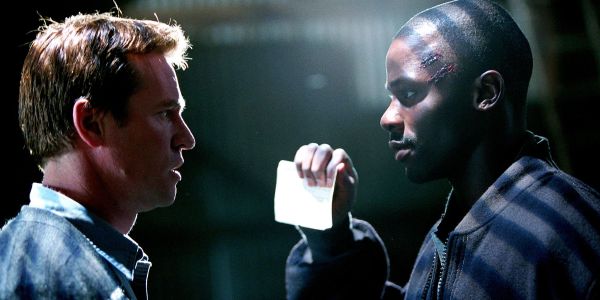
Starring Val Kilmer, Derek Luke, and a pre-Frozen Kristen Bell, David Mamet’s Spartan stands far apart from its military thriller counterparts with its one-of-a-kind blend of plot twists, realism, and hypnotic dialogue. Val Kilmer portrays Bobby Scott, a Delta Force operator tasked with finding the POTUS’s kidnapped daughter (Bell). In the pantheon of modern cloak-and-dagger agents like Jason Bourne and Jack Bauer, Scott makes all of them look like clumsy caricatures of the real thing. That’s because his persona is based on a real-life ex-Delta operator, Eric Haney, and the brutal, machine-like precision with which he speaks and moves is cinematic gold. At one point, he tells a rescued sex slave to “shut your fucking mouth” to avoid alerting the enemy, and punches her in the gut shortly after when she doesn’t comply.

The dialogue is unlike anything you’ll ever hear in a movie. Every word and line is so masterfully crafted that subsequent viewings always seem to reveal new subtleties that you missed the previous time. Take this exchange for instance, in which Scott’s protege Curtis asks him if Scott’s superiors are sending him to find the President’s daughter.

Curtis: They sending you in?

Scott: We’ll leave that to our betters.

Curtis: Why don’t you ask them?

Scott: Why would I want to know? I ain’t a planner, I ain’t a thinker. I never wanted to be. You got to set your motherfucker to receive. Listen to me. They don’t go through the door, we don’t ask why. That’s not a cost, it’s benefit. Because we get to travel light. They tell me where to go. Tell me what to do when I get there.

Amid the heavy shop-talk and countless plot twists, the movie never loses clarity on the driving force behind the plot, with various characters repeatedly asking “Where’s the girl?” as a means to anchor everything down. Spartan is an extraordinarily sophisticated spy thriller and demands the same level of sophistication from you in order to catch all of its hidden weapons.

In the Bedroom (2001)

Directed by Todd Field, this slow-burning, ultra-realistic family drama is so zen-like in its execution that it might as well have been directed by Stanley Kubrick. Although it implies a sappy romance, the title is actually a reference to how more than two lobsters trapped in a lobster cage will inevitably kill each other.

There’s not much I can say about the plot here, as much of its power stems from a shocking plot twist that happens about a third of the way in. The story takes place in a sleepy town in Maine, and involves a young man (Nick Stahl) dating an older woman (Marisa Tomei) who also has two kids, much to his parents’ (Tom Wilkinson and Sissy Spacek) disapproval. It may sound quite mundane at first, and In the Bedroom starts off seeming like it’s going to be a certain type of movie, but after said plot twist, it veers down a different path and reveals its true nature as something much darker than you expected.

In The Bedroom is ultimately about how the darkness that lurks within us will eventually have its day, one way or another. Until it does, everything we do to maintain a sense of normalcy is a lie. There are good and bad ways to let that darkness out, and the characters do so with varying consequences. The tension of anticipating which path they choose is what drives the narrative forward, culminating in a bit of a surprise ending you’re not likely to see coming.

The Place Beyond the Pines (2012)

'The Place Beyond the Pines' Trailer - YouTube

Despite being 140 minutes long, Derek Cianfrance’s The Place Beyond the Pines feels like it could have been twice as long in the hands of a less capable director. The movie weaves together a crime story from three different perspectives, each chronologically happening one after the other. Most other films with this premise would use non-linear storytelling to maintain a better sense of continuity, but this one instead adopts a refreshingly unique linear sequence of events, where the narrative baton gets passed onto a new character every third of the way through and the audience gets what initially seems like a new story taking place in the same world.

TPBTP looks at how one’s actions ripple outwards across time, passing the consequences onto new generations . The two central characters, stunt biker-turned-bank robber Luke Glanton (Ryan Gosling) and police officer Avery Cross (Bradley Cooper) are men who both want more for themselves, whether for selfish reasons or to support a family. Every detail of how they pursue those goals echoes throughout the years, down to how their sons turn out when they become teenagers. One character, who pursues his ambition for selfish reasons, winds up becoming very successful, but ends up with a son who is spoiled and uninspired. The other character, who breaks the law to to support his family, ends up with a son who is close to his family but plays fast and loose with the law.

On top of it all, TPBTP boasts some truly gripping action, with an incredible bank robbery and chase sequence more realistic than most of what you’ll see in the genre.

Bone Tomahawk (2015)

Examining 'Bone Tomahawk' and Its Place Among the Weirdest ...

Rounding out this list is probably the best western horror movie ever made, Bone Tomahawk. The premise is simple: a tribe of cannibals has kidnapped some townsfolk, and a group of volunteers including Sheriff Hunt (Kurt Russel) and Arthur (Patrick Wilson) set out to rescue them.

Director and writer Steven Craig Zahler likes his films slow, long, and gory (see my review of his most recent movie, Dragged Across Concrete), and Bone Tomahawk practically screams those qualitiesAfter establishing its premise, the movie slams into an agonizingly slow pace in which the rescue party, led by Sheriff Hunt, march across the desert plains to rescue their people. This journey, which encompasses half the movie, is filled with conversations between the characters and their understandings of each others’ motivations for joining the mission. All of this is to build them up as much as possible, because after seemingly forever, all hell breaks loose and the movie suddenly turns into an unhinged bloodbath in which limbs are chopped off, heads are severed, and a man is scalped before being torn in half vertically in one of the most stomach-turning sequences in recent memory.

Bone Tomahawk is a classic example of a movie that rewards your patience and attention with some of the most visceral action put to film. With every gunshot and gory dismemberment, you feel for the characters because you’ve journeyed with them across the desert and understand who they are inside. With an immensely satisfying conclusion, this is definitely a must-watch if you like your westerns bloody and thoughtful at once.

What Contagion Can Teach Us About the Wuhan Virus

The spread of the Wuhan Coronavirus has captivated the attention of just about every person with access to a newspaper and internet connection, with hundreds dead, tens of thousands infected and literally millions under lockdown. Like any global epidemic, the Coronavirus has had ramifications for every facet of modern society, from schools to workplaces to hospitals and, most dramatically, to air travel. It’s a massively complex problem with equally massive consequences, and luckily for us, we can get a very digestible overview of it thanks to an excellent movie that mirrors current events with frightening accuracy: 2011’s Contagion.

Here’s an introduction to the plot, and stop me if it sounds familiar: A deadly virus (later given the name MEV-1) originating from farm animals in China makes contact with humans, who unwittingly spread it to others by touching various objects, neglecting to exercise proper hygiene standards, and traveling to other countries where it spreads across the world. The promotion of snake oil cures and nefarious government schemes from conspiracy theorists contributes to a breakdown in societal order, while government figures and medical experts are faced with ethical challenges in their race to find a vaccine. If the plot to Contagion sounds rather clinical (pun intended), that’s because it’s intended to be. Director Steven Soderbergh sought to make the most accurate dramatic depiction of a viral epidemic, but thanks to a masterful script and a host of top-tier actors (Matt Damon, Gwyneth Paltrow, Kate Winslet, Laurence Fishburne, Jude Law, Bryan Cranston), the movie is immensely captivating without compromising on its focus on realism.

Contagion is masterful in the subtle way it shows how the virus spreads from character to character. The camera lingers on shots showing people touching door knobs, elevator buttons and cups, all without ever coming off as over-dramatic. The minimalist soundtrack, consisting mostly of electronic sequencers and droning, strikes a perfect balance by reinforcing the virus as an existential threat that nevertheless spreads in a most banal and uninteresting manner. The opening 15 minutes are as terrifyingly real as you will ever see in a dramatization of a viral epidemic, with infected people going about their lives, touching various surfaces in public while those around them remain completely oblivious.

The central takeaway of Contagion is that humans, for all our intellectual and physical capabilities, are haplessly predictable in the face of the worst that mother nature can throw at us. Much like the Coronavirus plaguing China and scaring the shit out of the rest of the world, the virus in Contagion is invisible, unpredictable, and prone to mutate for no rhyme or reason. It can come from any animal through a chance combination of all the worst factors, and once it spreads, it infects some while sparing others, and kills some of the infected while allowing others to recover with absolutely no rationale as to why some succumb to it while others survive. The humans, on the other hand, are reduced to animal-level survivalism against this existential threat. They loot stores, mob supply stockpiles, develop deep distrust among themselves, and, perhaps least surprising of all, prey on desperation by peddling fake remedies. Even those tasked with stopping the epidemic can’t resist their own ulterior motives, with one character secretly warning his lover to get out of the city before a quarantine can be put in place and another character kidnapping a WHO official in order to get his village to the front of the line for the vaccine.

These reactions aren’t something the writers dreamed up; anyone with a rudimentary understanding of human psychology can see this coming a mile away. Conversely, not even the most brilliant scientists in the world can anticipate these viruses or come up with a vaccine without a lot of time and effort. The brilliance of Contagion is that it builds the framework of its story entirely around careful research into its subject matter, and then injects just the right amount of dramatic flair to present a compelling story that has a beating heart at the center of its cold and calculating narrative. It’s a rare instance of a movie that can educate and entertain in equal fashion. You will learn about fomites, R-Nought, and how viruses are grown so that vaccines can be created, and at the same time you will be drawn into the extraordinary anguish the characters are forced into, such as the husband who discovers his wife’s infidelity after she succumbs to the virus, and the medical expert who refuses to stop trying to help people even as the virus eats away at her.

Whether it’s through a virus like the MEV-1 and Coronavirus, or a natural disaster like the Sumatra-Andaman earthquake, mother nature’s way of reminding us that she’s still in charge in spite of all our technological and economic might is cruel and unknowable. What films like Contagion can teach us is to stand strong against such threats and not allow such threats to wipe away the virtues and morals we have worked so hard to cultivate and be overcome by our most animalistic instincts. And to wash our goddamn hands.

Remembering Neil Peart: The Philosopher Drummer

This week, Neil Peart, the drummer and lyricist of progressive rock band Rush, passed away from brain cancer. Of the various musical inspirations that have passed over the past few years, such as Chris Squire, Greg Lake, and John Wetton, Neil Peart’s is by far the most devastating. It was Rush’s signature progressive rock sound that inspired me to pick up the bass guitar and embark on a 12-year musical journey that has culminated in four solo albums, with a fifth on the way.

The world of music has no shortage of amazing drummers, but Neil Peart stood above them all because he approached drummer from both an artistic and technical perspective. He deftly blended memorable, hard-hitting drumming with complex time signatures that nevertheless never made the songs feel confusing, such as in the song Tom Sawyer, which seamlessly transitions between 4/4 and 7/4 without you even realizing it. His drum parts had such memorable details, such as the ride cymbal triplets during Subdivisions or the drum fills after the guitar solo in Tom Sawyer, that during concerts it wasn’t hard to spot guys in the audience air-drumming entire songs. As I matured as a musician, I became entranced with the virtuosity of guys like Dennis Chambers and Terry Bozzio, but I always came back to Neil Peart because although he wasn’t the most technically skilled, he most assuredly could write and play the most memorable drum parts of all.

Neil’s drum solos, which I had the privilege of seeing in person six times, communicated stories and feelings. Most drum solos are tiresome exercises in technical prowess, but Neil’s solos were meticulously thought out, varying greatly between blistering barrages and slowly building crescendos before culminating in a big-band style extravaganza. During Rush’s Clockwork Angels tour, his solos featured the sounds of mechanical hissing and metallic echoes to suit the steampunk-inspired story the album was based on. No other drummer on planet earth had the combined level of virtuosity, musicality, theatricality as Neil Peart.

Neil was also the band’s primary lyricist, and his writing took Rush from a simple blues-inspired band to a progressive rock powerhouse that championed the power of the individual and human liberty in their music. Some of Neil’s best writing can be found in songs like Natural Science, Free Will, Tom Sawyer, Time Stand Still, and The Garden. While many other bands write lyrics from an emotional perspective, whether it’s songs about love, depression or happiness, Neil’s lyrics came from a place of deep thoughtfulness, backed by a wealth of research. Here’s one of my favorites lyrics from Natural Science, a song about how man, with all his capabilities, must look to mother nature to learn how to achieve a state of balance:

Science, like Nature
Must also be tamed
With a view towards its preservation
Given the same
State of integrity
It will surely serve us well

Art as expression –
Not as market campaigns
Will still capture our imaginations
Given the same
State of integrity
It will surely help us along

The most endangered species –
The honest man
Will still survive annihilation
Forming a world –
State of integrity
Sensitive, open and strong.

Neil was also hugely introverted and wrote about his feelings of isolation and awkwardness in songs like Limelight and Subdivisions. The latter song became a sort of anthem for introverts worldwide, including myself, who struggled with growing up in their teenage years and couldn’t understand why we didn’t fit in. Here’s the chorus:

Subdivisions
In the high school halls
In the shopping malls
Conform or be cast out

Subdivisions
In the basement bars
In the backs of cars
Be cool or be cast out

Any escape might help to smooth
The unattractive truth
But the suburbs have no charms to soothe
The restless dreams of youth

But perhaps his best and most important piece of writing can be found in the final song of Rush’s final album, The Garden from 2012’s Clockwork Angels:

The measure of a life is a measure of love and respect
So hard to earn so easily burned
The measure of a life is a measure of love and respect
So hard to earn so easily burned
In the fullness of time
A garden to nurture and protect

And, for all his artistry and technical contributions, it is in these lyrics that Neil imparts to us the most valuable lesson of all: to treat our lives and our actions as a garden that must be constantly nurtured with love and respect towards those around us; a task so difficult to accomplish because of how easily our missteps can tarnish everything we work so hard to build. After all the lessons on how to play music, how to write songs, and how to mix tracks, the best lesson an artist can impart to another is how to live a better life. It’s Neil’s lesson that I work hard to be mindful of every step of the way, whether it’s in music or the painful grind of life. Thank you, Neil.