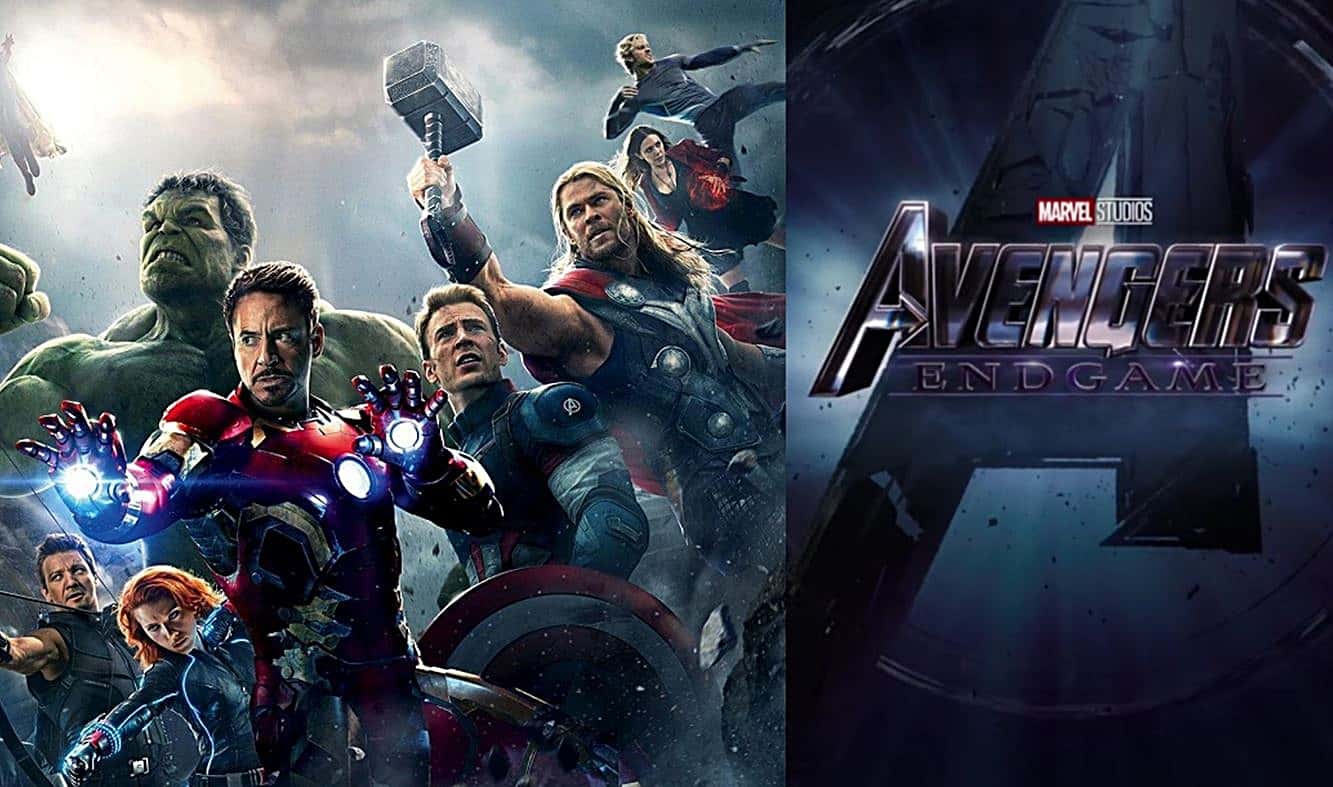
Avengers: Endgame Is Simply Not Great

Note: This critique contains spoilers for Avengers: Endgame.

By now you’ve likely watched Avengers: Endgame, a movie that apparently every man, woman and child on planet Earth is legally required to watch. In all likeliness, you probably think it’s a very good movie. Admittedly, it does provide a worthy sendoff for many of the characters we have followed over the course of a decade, especially Tony Stark. Unfortunately, by every objective measure, Endgame simply isn’t a good movie as a whole and squanders much of its gargantuan three-hour runtime just so it can hurry up to the last 30 minutes.

The main problem revolves entirely around the hackneyed time travel story. Time travel is a very risky plot device to use because you open yourself up to an endless array of plot holes (and indeed this film does have a few, particularly one involving Captain America) and have to spend valuable minutes covering all your bases with long explanations on how your movie’s brand of time travel works. Endgame tries to brush past these intricacies by namedropping famous time travel movies like Back to the Future, with the Hulk explaining that the time travel they are using to undo Thanos’s actions doesn’t involve the “butterfly effect”, in which rearranging events in the past affects the future; it just spawns an alternate timeline that continues on its merry way while yours remains untouched. This, I thought, was such a lazy cop-out and a convenient way for the writers to get out of the corner they had written themselves into.

With half the world population dissolved by Thanos, the Avengers go find him in hopes of recovering the time stones and undoing the damage. It turns out that Thanos has already destroyed the stones, and Thor decapitates him on the spot before they have a chance to properly interrogate him. I get that this was a sort of Rian Johnson-esque attempt to subvert expectations, but to follow that up with a cliched, weak-ass time travel plot is just lazy storytelling and condemns the rest of the movie into mediocrity.

The next two hours of the movie are some of the most tedious and meh-inducing I’ve ever seen in a blockbuster of this magnitude. By the time the Avengers recover the second stone, I realized that this movie was basically now a TV show. It had no cinematic scope or sense of wonder or discovery; you’re just experiencing remixed scenes from previous MCU movies as the plot twists itself into a pretzel in order to resolve a seemingly unsolvable conundrum. In this middle act, Endgame is essentially a very long exercise in fan service and retreading its own lore. This might be fine as a Netflix series, but it does not deserve to go on the big screen.

The other major factor that exacerbates Endgame’s meh-ness is that, having killed off Thanos early on for the sake of shock value, it has no compelling antagonist for the Avengers to go up against. The movie becomes a long time-travel story with no real threat or stakes involved; the Avengers are merely trying to undo something they’ve already come to live with for five years, while at the same time seeing things in the past that make them reflect on themselves. Once you realize that it is basically a very, very long wave goodbye, Endgame feels less like an endgame and more like an epilogue.

Nearly halfway into the story, with the Avengers breezing through their time travel heist unchallenged, I was genuinely curious as to what sort of threat Endgame would conjure in the absence of Thanos. It turns out the answer was…more Thanos. And it’s not even the same Thanos responsible for the snap; oh no, this is a pre-snap Thanos from the past who hasn’t even gotten around to setting his Infinity War scheme into motion. Compared to his older self, pre-snap Thanos is a buffoonish caricature. Instead of wanting to save the world from itself by alleviating overpopulation, he’s now a cartoon villain who wants to destroy ALLLL life as we know it, and as if that wasn’t cliched enough, he adds that he will enjoy doing so. How do you go from the Infinity War Thanos, a surprisingly complex villain with complex motivations and ambiguous morality, to this? When the climactic final battle rolls in, it feels like a cheap, obligatory, tacked-on excuse to have the entire MCU cast do battle against a generic bad guy, with none of the weightiness of post-snap Thanos. There’s even an eyeroll-inducing feminist empowerment moment in which all the female superheroes conveniently converge on one spot of the gigantic battlefield to do this tag-team girl power ass-kicking. If that doesn’t tell you this final battle is little more than fan service than a meaningful part of the story, I don’t know what will.

Endgame could have been a lot better if they did away with the idiotic time travel story and instead went for a more conventional but effective route, with the Avengers hunting down post-snap Thanos throughout the movie. He is far and away the most well-written and formidable villain in the MCU, and it’s such a waste the writers elected to kill him off like he was nothing. The Last Jedi did a terrible job at this; what made the Endgame writers think it would work for them?

The best thing I can say about Endgame is that, once again, Robert Downey Jr. outshines everyone as Tony Stark; by far the most entrancing, witty and charismatic superhero of all time. Because he’s so relentlessly funny, the moments when Stark actually gets serious, especially when it concerns his family, are some of the finest moments in Endgame. The bit where he hugs his dad, I will admit, stirred something in me. The fact that Stark sacrifices his life at the end to save his friends is irrefutable proof that The Avengers series is and always has been about Iron Man; an arrogant millionaire playboy who gradually comes to learn the meaning of family and friendship, and offers up his own life to save them. It’s an incredible character arc on a scale never seen before, spanning eight movies, and I give RDJr major credit for that; I just wish I could say similar things about the rest of the movie. Endgame isn’t bad by any stretch of the imagination, but once you get past the hype and fan enthusiasm, it isn’t hard to see that it simply isn’t the world-shaking cinematic monument that everyone’s making it out to be.

The 21 Greatest Movies of All Time…In My Opinion (#1)

SCROLL DOWN CAREFULLY IF YOU DON’T WANT THE #1  CHOICE REVEALED BEFORE YOU’RE DONE READING THE PREAMBLE

———————-
At last, we have arrived at the #1 greatest movie of all time (in my opinion). Before we go on, I should explain something. Alien is my favorite movie of all time, but when it comes down to the literally greatest movie of all time, every single aspect of it, be it narrative, cinematography, set design, sound design, or soundtrack, must have a degree of grandiosity and scale that befits such an accolade. It can’t just be a claustrophobic story of an alien slaughtering a small group of people on a ship; there needs to be a degree of epic-ness to the movie in question for it to be called the greatest of all time. Every facet of its design can’t just be well executed; they must also explore the capabilities of the film medium to their maximum potential. So with that in mind, here is, at last, what I consider to be The Greatest Movie of All Time:


1 – 2001: A Space Odyssey (1968)

A scene from Stanley Kubrick’s “2001: A Space Odyssey.” The groundbreaking movie has been re-released 50 years after its debut in 1968. (Warner Bros.)                                 A scene from Stanley Kubrick’s “2001: A Space Odyssey.” (Warner Bros)

Literally half a century after it was made, not one of the tens of thousands of movies put out since 1968 has come close to matching the transcendental storytelling of Stanley Kubrick’s 2001: A Space Odyssey. This is a spectacular work of art unlike anything, be it a book, movie, painting, or song, that has ever been crafted by human hands, with a story as expansive and grand as one’s imagination can muster.

2001 A Space Odyssey (1968) by Stanley Kubrick

I first watched 2001 with my high school friends, one of whom had the DVD. Initially, I was confounded by it and couldn’t make it through the 142-minute runtime without catching some serious Zs. The agonizingly slow pace, the near-absence of dialogue, and the minimalist storytelling style were such a shock to my system that I think my mind’s instinct was to outright reject the movie. Despite that, a small part of me felt that, in spite of my confusion, I was watching something profound and unlike anything ever put to film. A year or so later, I had my own copy of the DVD and after two or three attempts, managed to watch 2001 in its entirety in one sitting for the first time. They say that humans can only use 10% of their brains’ capabilities. After watching 2001, I felt as if my brain unlocked an extra 20%.

From a technical perspective, 2001 was incredibly well researched and prophesied a number of technologies that today are synonymous with human development. Keeping in mind that this movie was made before the 1969 Moon Landings, 2001 accurately depicted the surface of the moon and the physics of space travel. It also predicted the advent of video calling, electronic tablets, in-flight entertainment, suspended animation, and space robotics.

One of the most memorable aspects of 2001 is its soundtrack, which uses classical pieces like The Beautiful Blue Danube and Thus Spoke Zarathustra. You’d think that these pieces were composed specifically for the movie, because they sync up with the majestic space sequences in ways that defy description. Another exceptional piece of music is the monolith song, aka György Ligeti’s Requiem, which plays whenever the characters encounter the mysterious alien monoliths. The song literally consists of a female and male choir singing a rising crescendo that can be described as terrified shrieking and humming. It’s one of the scariest things I’ve ever heard and does wonders to convey the vast, unknowable nature of the alien beings behind the monoliths.

2001‘s slow and minimalist style can be an acquired taste for most. Long, uninterrupted takes of spacecraft docking and astronauts floating through space dominate the movie, and there are virtually no dramatic outbursts from any of its actors (unless you count the apes from the opening chapter). It can seem off-putting until you realize that 2001’s visual style centers around the concept of beauty; of marveling at something so magnificent to the eyes that you savor every second it is on-screen. This is a movie with a richly detailed plot beneath its surface, but it would rather you take it in as a sensory experience as much as a mental one.

Then we have the special effects, which are jaw-dropping, especially when you realize this was 1968. Everything, everything was accomplished through practical means. The spellbinding sequences of astronauts David Bowman (Keir Dullea) and Frank Poole (Gary Lockwood) defying gravity as they move about the Discovery were accomplished by strategically rotating the set around the actors while they simply walked on the spot. The cameras filmed from a fixed position, giving audiences the illusion that the actors were walking up the walls and on the ceiling. Another example: The sequence in which Bowman flies through an airlock in zero-gravity was accomplished by suspending the actor by wire and having a stagehand jump off a platform with the wire in hand, causing the actor to “fly” through the airlock. One more example: the famous hyperspace sequence was, hard to believe, not done with any computers. It instead utilized slit-scan photography of high-contrast images, and filming various swirling chemicals in slow motion.

The special effects people of 2001 were not CGI artists working entirely behind computers; they were more akin to magicians, using clever trickery and deceptively simple solutions that had more to do with engineering and physics than computers. Because of this, 2001 can never, ever be beaten by any CGI-driven film, not even Christopher Nolan’s Interstellar, because everything in it is REAL.

The story of 2001 is about as grand as can be, and surprisingly optimistic. Rather than focus on deep characterization or intense dialogue, the story zooms out to tell a tale of human evolution and the technologies man must struggle with to get to the next stage. Nowhere is this more apparent than the transition between the opening Dawn of Man chapter and the Clavius chapter. In a single jump cut, the film transports us millions of years forward to show how humans evolved from smashing skulls with animal femurs to threatening each other with orbital nuclear weapons platforms. It turns out that man’s evolution is triggered by the presence of alien monoliths, left by a sentient race so advanced that it transcends 3D space in a manner beyond human understanding. For such a story to exist in 1968 is mind blowing, and it still is a far more original concept today than the vast majority of science fiction movies.

2001: A Space Odyssey is by far the most epic of film narratives. It features an AI gone wrong, hyperspace travel, great mysteries of benevolent aliens in 4D space, and the creation of amazing technologies. Above all, it is a movie that tells a story that seems impossible to tell: the journey of all humanity from the deserts of prehistory to an existence beyond space and time. It is also a technical masterclass on special effects, sound design, and cinematography. To this day, no other filmmaker or film studio has had the creativity or the balls to craft something so ambitious, so highly original and so disruptive to the most inherent concepts of film, storytelling and art in general. That so many people today have neither the patience or ability to comprehend this movie is a sad testament to how major film studios have eroded away general audiences’ creative tastes with an avalanche of shitty superhero movies, reboots, remakes, sequels, and, perhaps worst of all, soft reboots. If you haven’t seen 2001 before, I challenge you to seek it out however way you can, sit your ass down for a good 142 minutes, and watch it with a very open mind. I promise you won’t regret it.

That just about rounds out my 21 favorite movies of all time; hopefully now you have a few movies to add to your “To Watch” list. Next up, the 5 Shittiest Movies I’ve Ever Seen!

The 21 Greatest Movies of All Time…In My Opinion (6-2)

We’re now at the final stretch of the 21 Greatest Movies of All Time (in my opinion). These next few films are especially near and dear to my heart and have been hugely influential in helping me realize what kind of art I gravitate towards. They are virtually flawless and embody all the reasons I go to the movies. So here we go now…

6 – Heat (1995)

Street Shootout Heat - YouTube

Michael Mann’s Magnum Opus is without any doubt the greatest crime story ever told. It stars both Robert De Niro and Al Pacino. It has the most realistic, well choreographed shootout in film history. Its epic three-hour runtime includes big heists, police surveillance, corporate betrayal, familial trauma, and massive gunfights.

Unlike other crime epics like The Godfather, Heat is still very much a sleek, modern movie that feels like it could still take place today. The film has a steely-bluish tint throughout. Electric guitars and synthesizers permeate the score. Characters on both sides of the law speak quickly and professionally, with distinct personalities that suggest enormous depth, even if the movie doesn’t have time to focus extensively on them; they just exude coolness with every movement and every word. This is what is at the heart of Heat: The immense professionalism of both cops and robbers in the modern urban battlefield, whose zealous dedication to the job wreaks havoc on themselves and their loved ones.

The centerpiece of Heat is its jaw-dropping climactic shootout in the streets of downtown Los Angeles. It was filmed with an eye towards accurate tactics, with the bank robbers using suppressing fire to cover each others’ movements while the police attempt to flank them. The sound of the gunfire was also recorded “as-is” with no effects foleyed in, and the cacophony bouncing off the surrounding buildings makes Heat‘s shootout sound terrifyingly loud. Technical perfection aside, the shootout is as great as it is because by the time it happens, we are completely invested in just about every character who is involved. Whether it is McCauley, Hannah, Shiherlis (Val Kilmer), or Cherrito (Tom Sizemore), every death and injury hits hard because we have come to fully understand these characters inside and out. It isn’t just an obligatory gunfight between cops and robbers; its the confrontation between two unstoppable forces that we have all been waiting for.

The mark of a truly astounding movie is that it’s so detailed and nuanced that you notice new things every time you watch it. Heat may be almost three hours long, but every second of it is peppered with bits of dialogue, small gestures and shifts in posture that you might not notice at first, but reveal so much about its characters and storyline. I’ve seen Heat a number of times, and every single time I watch it again it feels fresh because of that. I couldn’t ask for much more out of a movie.

5 – Black Hawk Down (2001)

Black Hawk Down Wallpapers

I was too young to watch Black Hawk Down in theaters when it came out, which is why my friends and I hatched a plan involving fake IDs to get into the theater. It worked, and I don’t for one moment regret the decision. This is my favorite war movie of all time and one of maybe three movies that have nearly moved me to tears.

What Black Hawk Down does incredibly well is to accurately portray the Battle of Mogadishu from two distinct perspectives: The violent mayhem experienced by the Army Rangers and Delta Force operators on the ground, and the strategic and bureaucratic  clusterfuck paralyzing the military commanders up high. This is a masterfully paced and edited depiction of real-life chaos, and repeat viewings reveal subtle hints that the operation was doomed to fail from the very beginning.

From a sensory perspective, Black Hawk Down’s visual and sound design are unmatched by any war movie, aside from maybe Saving Private Ryan. Of particular note is the approach sequence in which the American forces fly into Mogadishu in their Blackhawks and Little Birds. It’s a sequence so astonishing that you can’t even blink. As the choppers approach the mission area, the sounds of the world fade away as Hans Zimmer’s  soundtrack flows in, electronic percussion imitating the sounds of the helicopters’ rotor blades and a sense of dread marches in to the sound of thunderous toms. The camera switches focal lengths and uses contrasts of color to great effect; one moment, the choppers look like shadow dancers in perfect unison with one another, and in the next shot, they resemble an enormous flock of birds spread out across the skies.

The all-star cast includes Josh Hartnett, Tom Sizemore, Orlando Bloom, Tom Hardy, Ewan McGregor, Jeremy Piven, Eric Bana, Jason Isaacs and William Fichtner. Yet, you don’t even realize half of them are in the movie because they look indistinguishable with their combat gear on. More so than any other war movie, Black Hawk Down has no real main characters and instead portrays collective heroism from the men on the ground, all of whom were willing to die for one another. Case in point: the scene with Gary Gordon and Randy Shughart defending a downed Blackhawk against waves of Somali gunmen. It’s extremely difficult to watch, but it’s an extraordinary portrayal of two men who willingly went to their deaths in order to give their brother a small chance at survival.

Someone once said women cry to Titanic, and men cry to Black Hawk Down. How true.

4 – Zodiac (2007)

"Zodiac" (2007). David Fincher

During my college years, my friends and I walked into a screening of Zodiac fully expecting it to be a slasher movie. What we got instead was a 2-and-a-half hour detective story that is extremely light on the slashing. My friends walked out of the theater, thoroughly bored. I stayed, and Zodiac became one of my favorite movies of all time.

Zodiac isn’t so much about the real-life killer who terrorized North California as it is about the decades-long investigation to find him. What exemplifies this movie is that it successfully tells the true story of the Zodiac manhunt without much sacrificing of accuracy, while at the same time maintaining a compelling narrative. A lot of this has to do with the performances of Jake Gyllenhaal, Robert Downey Jr. and Mark Ruffalo, as well as David Fincher’s flawless direction.

Initially, the film portrays the Zodiac’s killing spree and the turning of gears that gave life to the investigation. Once it gets into the swing of things, Zodiac takes on a hypnotic quality, slowly but surely drawing you into the investigation along with its characters. You find yourself trying to work out the identity of the killer, and when a supposed slam-dunk in the case turns out to be a dud, it’s impossible not to feel the same frustration as the detectives.

Casual moviegoers will be exhausted by Zodiac while cinephiles will be entranced by it; something that, in a metaphysical way, imitates the point of the movie. The real-life Zodiac investigation was a frustrating bottomless rabbit hole of potential suspects, loose threads, and deflated expectations. Those who were peripherally interested in the case gradually lost interest, while those who most actively investigated it only became more obsessed. The Zodiac killer wasn’t memorable just because he killed some people and got away with it; it’s because he stirred up the imaginations of investigators, journalists, armchair detectives and scholars, and profoundly affected their lives without him having to so much as lift a finger.

Zodiac is 1000% a detective story in the purest sense, and doesn’t require shootouts, chases or gratuitous violence to stay interesting. It’s a story about the thrill of the investigation, the addictive sensation one gets when one puts the pieces together, and, unfortunately, the disappointment that slams into one’s face when real-life doesn’t fit the narrative. It is by far the most unflinchingly realistic story of its kind, and for that it fully deserves its #4 spot on my list.

3 – The Insider (1999)

The Insider (Blu-ray) : DVD Talk Review of the Blu-ray

At the #3 spot is a movie that, unlike pretty much every other movie on this list, has no violence, no deaths and no injuries; not even so much as a shoving match to drive up the action. Michael Mann’s The Insider is a ferociously compelling drama based on the true story of the Brown and Williamson/CBS scandal with some of the most incisive dialogue and arresting performances put to film.

The Insider, at its heart, is a classic David versus Goliath story, with Russell Crowe playing Jeffrey Wigand, ex-Vice President of the Brown and Williamson tobacco company, who goes up against his former employer to expose a public health hazard to CBS News. Instead of swords and slings, the battle is fought with lawsuits, court depositions, non-disclosure agreements, and something called tortious interference. Like many of my other favorite films, The Insider sits upon a bedrock of exhaustive research on the part of the filmmakers to ensure their story and dialogue are accurate and authentic.

In keeping with Mann’s flair for accuracy, The Insider does not do a whole lot to artificially heighten its drama. There’s no scene of Wigand punching out a B&W executive or someone throwing a brick through his living room window. At its most action-packed, Wigand uses a golf club to mildly threaten a man he thinks is trying to intimidate him. I mean shit, the movie even states outright in its end credits that one of its scenes (in which Wigand finds a bullet in his mailbox) was added for dramatic effect. Instead, what we get is the real-life drama of a man under 360-degree assault from some of the very people he’s trying to help by exposing B&W’s dangerous practices. Even worse, the movie shows how CBS News, who are supposedly in the business of informing the public, intentionally sabotage their own 60 Minutes program when they realize publishing Wigand’s information could potentially open them up to a legal disaster.

The performances are some of the best I’ve ever seen. There are way too many excellent scenes to list here, but the most memorable one by far is of attorney Ron Motley (Bruce McGill) tearing a B&W executive a new asshole, screaming “WIPE THAT SMIRK OFF YOUR FACE!” in such a terrifying manner that you will surely be silenced by it alongside the poor bastard getting yelled at. Christopher Plummer also brings enormous gravitas to the movie with his portrayal of Mike Wallace, a veteran journalist whose idealized vision of CBS is brought crashing down when he sees the insane degrees to which they try to cover up the truth.

The Insider is an extremely rare and well-told story of corporate and media malpractice, the kind of which still happens today, that we should all be aware of. It isn’t about a war in a distant country or space aliens or serial killers in a small town. This is happening in the society we live in and affects our lives quite directly. It isn’t just a film; it’s a warning.

2 – Alien (1979)

Alien (1979) - Cinespia | Hollywood Forever Cemetery ...

1979 is the year science fiction and horror were changed forever by a single movie. Alien isn’t just a profound landmark film with a great story and great actors; it’s the first monster movie that reaches into our subconsciousness and defiles the very thing that defines all life.

One of the great things Alien does is bring a working-class vibe to science fiction. There are no sleek space ships or fancy space suits; the Nostromo and its crew are basically a giant space 18-wheeler being driven by grizzled blue-collar joes who like to fuss over bonuses, read dirty magazines, and get into arguments a lot. It does wonders to make the characters likable, and just like The Thing, it isn’t hard at all as a viewer to experience the roller coaster of wonder and horror alongside them.

The xenomorph that hunts and kills the crew will forever be the greatest monster movie ever created and it isn’t because it bleeds acid, or that its the perfect organism. It’s because every facet of its design is designed to disturb us subconsciously. Think about it. Its life cycle begins when a facehugger is birthed by a vagina-looking egg. The facehugger thrusts an appendage down one’s throat. After its violent chest-bursting birth, it’s head resembles a penis and it kills by thrusting another appendage from within its mouth into one’s skull. The xenomorph is a horrifying perversion of the very things that gave us life, and it exists solely to give us the worst of deaths. It’s hard to think that there could be a creature more terrifying than that.

I’ve seen Alien a number of times since I was young, of course, and as an adult, one of the things I picked up on is the complexity of its secondary villain, Ash the android. After being exposed by Ripley as working against the crew to protect the xenomorph, Ash tries to murder her by, of all things, rolling up a magazine and ramming it down her throat. At first, I and I assume many others thought this was strangely comical but figured it was because Ash was in the process of a major malfunction. The more likely explanation is that Ash, an android, is trying to both act out a deep-seated rape impulse on Ripley, and imitate the creature he so desperately admires by doing to her what it did to Kane. There is such a shocking level of depth to this movie that even the secondary antagonist is miles beyond most other movies’ main antagonists.

Alien also features some of the most distinctive set design ever. The clear highlight is the 70’s style, boxy clunky-junky design of the Nostromo. The ship has two distinct looks: the pristine white and plastic-y living and medical quarters, and the gray, metallic and angular look of the bridge and engineering deck. Even the sounds of the ship are ear-catching, whether it’s keyboards click-clacking, doors hissing open and shut, or even just the air venting. The scene where Ripley activates the Nostromo’s self-destruct sequence, for example, is just pure ASMR.

For a film of such tightly constrained scope, Alien broke so much ground not just by revolutionizing genres, but filmmaking and storytelling concepts as well. It introduced the greatest female protagonist of all time, Ellen Ripley. It brought a relatable cast of characters to the table. It created a movie monster that set the standard for all other movie monsters. It fused science fiction and horror together for the first time. The list goes on and on, but for me, Alien is the starting point of my obsession with its amazing universe that drove my imagination throughout much of my youth.


The 21 Greatest Movies of All Time…In My Opinion (11-7)

Update: I realized that there was one movie I had forgotten to include in this list because I hadn’t seen it in a long time, so this list is now the 21 Greatest Movies of All Time. If you have a problem with that, you can speak to my lawyer. Anyway…

We’re getting closer to the home stretch of the 21 Greatest Movies of All Time (In my opinion), and when you’re done reading this chapter, you’ll notice that most of the movies on this list so far are quite modern, being from the 90s to 2000s. Although the 1940s to 80s had plenty of classics, I’ve found that the 90s to 2000s were when cinematography, sound design, and visual effects became sophisticated enough to match the highest levels of storytelling. With that in mind, let’s get on with it.

11 – Blade Runner 2049 (2017)

BR2049

Blade Runner 2049 is the rare sequel that expands and improves on every aspect of its predecessor. Of course, when you have both director Denis Villeneuve and cinematographer Roger Deakins involved, it’s hard to imagine this movie would be anything less than near-perfect.

The plot isn’t exactly high-concept and does require viewing of the first Blade Runner to fully appreciate. Yet, beyond the scope of its connect-the-dots detective story is a larger narrative that is signature to the cyberpunk genre. 30 years after the events of the first movie, the world of Blade Runner 2049 is choked in dust and smog, scattering light into the once deep black night sky of Los Angeles. The human inhabitants are but a simulacrum of their former selves, having descended into apathy and unbridled hostility for replicants. Meanwhile, many of the replicant characters, especially K, are trying to achieve the humanity their creators have long forgotten about, whether it’s having a holographic girlfriend who serves holographic steak dinners while dressed as a 1950s diner waitress, photographing virtual forests as a hobby, growing crops, or indeed, giving birth. It is through these glimpses of humanity that the movie never loses its soul amid its relentlessly grim surroundings and the plot drives along its 160-minute run time without becoming dreary.

However, it is the unity of cinematography and soundtrack that cements Blade Runner 2049 as one of the greatest movies of all time. Not since 2001: A Space Odyssey has a movie been so visually and aurally hypnotic. Every – single – shot of this movie is mind-bogglingly perfect, whether it’s K flying over the giant, endless dystopia of 2049 Los Angeles, the crushed black shadows cast within Wallace Headquarters, the sterile gray walls of K’s apartment, or the brown and orange wasteland of Las Vegas. This movie could have been four, five hours long and I’d still watch it; it’s like giving your eyes a reward.

The soundtrack is nothing short of godly, especially to a musician like myself. Each of the movie’s four main settings has its own motif: the aggressive, electronic soundscapes of Los Angeles, the haunting throat singing of the Wallace Corporation, the minimalist ethereal pads of San Diego, and the thunderous booms of Las Vegas. The theater I watched this in was literally shaking during certain parts of the soundtrack, as composers Benjamin Wallfisch and Hans Zimmer somehow managed to conjure frequencies that one could feel in one’s bones. One particular element of the soundtrack that recurs sounds like a motorcycle revving through a guitar amplifier. It turns out, after some research, it’s the sound of a male choir processed through endless layers of synthesizers and then run through a pitch bender.

It may be a recent movie, but there’s little doubt in my mind that Blade Runner 2049 will stand tall among the classics that have come before it as one of the high points of what cinema can achieve through sight and sound.

10 – There Will Be Blood (2007)

TWBB

I’m sure if you asked the average know-nothing if they’ve heard of There Will Be Blood, they won’t know what you’re talking about unless you mention the scene pictured above. Aside from the sugary imagery it conjures, it’s a scene that surprisingly sums up the movie as a tale of the single most corrupting force in human history, greed, and the bottomless depths people will plumb in its name.

TWBB is driven by two powerful figures in film: Director Paul Thomas Anderson, and probably the greatest actor of the last 30 years, Daniel Day-Lewis. The movie is generally regarded as a drama, but the darkness that drives protagonist/antagonist Daniel Plainview to murder, lie, and steal from everyone around him, including his own son, pushes the film close to the boundaries of horror. After all, the greatest of horror movies are often about the evils that lie within the hearts of men, rather than the evils that dwell in the ether.

Taking place during the Southern California oil boom of the early 1900s, the story depicts a multitude of characters searching for wealth, with Plainview’s success in mining oil being the catalyst for their greedy impulses. Chief among them is Eli Sunday, an evangelical preacher in the oil-rich town of Little Boston. Both Plainview and Sunday become intertwined in a tornado of deceit, with both characters lying to others while themselves being lied to. At varying points, both characters even wield the rhetoric of religion over the gullible townsfolk as a means to their selfish ends.

Yet, what separates Plainview is the same thing that allows him to succeed where others fail: his hatred of people. As he explains, he doesn’t just want to succeed, he hates people who try to succeed over him and enjoys watching his competition fail. Hate is what drives There Will Be Blood, and it is unlikely any other director-actor duo could make such a movie even remotely palatable, let alone one of the greatest of all time.

9 – Aliens (1987)

There’s no way Aliens can be excluded from this list. Ever since I watched it on VHS and the extended cut on Laserdisc in the 90s, Aliens undoubtedly ignited my interest in movies for years to come.

Aliens, like many of the older films on this list, is a movie that becomes more impressive as time goes on because of the rapid race to mediocrity that is consuming blockbusters today. From a technical perspective, the distinct design of the colonial marines’ armor, pulse rifles, smart guns, armored personnel carrier, and dropship will forever inspire science fiction military movies. Aliens is also a rare movie in which the set design by itself tells a great deal of the story, as Ellen Ripley’s (Sigourney Weaver) surroundings gradually regress until she finds herself in the pit of hell itself: the Alien Queen’s nest.

And speaking of which, Aliens might just be the greatest movie to feature both a female protagonist and antagonist. When I watched this movie as a kid, all I took away was a story of space marines in a desperate stand against an alien force. Rewatching it as an adult, I see that the movie is really about two kinds of female power that have been the cornerstones of all creation: The power to nurture and protect (Ripley) and the power to reproduce (The Alien Queen).

It’s laughable how people today prattle about needing girl-power in action movies. They clearly haven’t seen Aliens. Ripley is tough and cool-headed in situations that send the marines into a panic, but that’s not why she’s a compelling female protagonist. She’s a compelling female protagonist because her maternal instinct to protect Newt drives her to insane degrees of heroism. This is all the more true if you’ve seen the extended version, in which Ripley’s daughter is revealed to have passed away while Ripley was drifting in space for 57 years. She sees Newt as a second chance to be a mother, and that emotional drive is what powers Aliens from start to finish.

8 – Letters from Iwo Jima (2006) 

Letters from Iwo Jima is not just Clint Eastwood’s finest movie, it’s also the most important war film of all time. It is a masterful depiction of the Battle of Iwo Jima from the Japanese perspective that tragically reveals that the Pacific Theater of World War II was between two countries that, under any other circumstance, would have been the best of friends.

A critical scene in Letters occurs when the Japanese soldiers capture an American soldier, Sam. He is “interrogated” by an officer, Takeichi Nishi (Tsuyoshi Ihara). Only after Nishi reveals that he has been to the United States and is friends with a few celebrities there that Sam warms up to his captor. After Sam dies from his injuries, an officer, Takeichi Nishi, searches his corpse and finds a letter his mother wrote to him. Nishi reads the letter out loud to his soldiers, who are shocked to discover that the white-skinned savage they were taught to hate is an ordinary kid like most of them. This, along with the flashbacks of General Kuribayashi (Ken Watanabe) visiting the States, is what really struck me about Letters. It’s the tragedy of an intelligent and deeply cultured people being led into an unnecessary bloodbath.

Despite this, the movie paints with an objective brush and doesn’t shy away from the savagery both sides inflicted on one another and themselves. The Japanese propensity for suicide, in particular, featured in all its unpleasant glory, with one gruesome scene of soldiers blowing themselves up with grenades upon learning that the Americans will soon overrun their position.

The actual Battle of Iwo Jima resulted in nearly all Japanese forces killed, either by US forces or by their own hand. Where Letters seals itself as such a monumental work is in finally giving voice to the thousands of Japanese soldiers who perished, and giving insight into the mindset that led to such a ferocious battle. Go watch this movie however way you can.

7 – The Thing (1982)

TheThing

Nearly 40 years after it was made, The Thing still remains the greatest practical effects monster movie of all time. It effortlessly weaves together a story of immense paranoia with astonishing, unmatched animatronics and gross-out horror to create a visual spectacle that is repulsive but impossible to look away from.

I once read a YouTube comment that asked which was the greater threat to humanity: The Thing or the Xenomorph from the Alien movies. It may seem like a close call, but the Thing is far and away the most formidable alien creature in science fiction horror. It can imitate any life form it wants, down to its personality, and use its disguise to infiltrate and sabotage human institutions. It could theoretically take on the form of a world leader or military commander and do devastating damage to whole countries. Even when exposed, it is capable of re-arranging its form on the fly in order to escape, with parts of it breaking off to hide while the main body distracts its attackers. Above all, the very concept of the Thing slowly digesting a person as it violently assimilates them is disturbing beyond anything your mind can conjure.

We get to see what a creature of this nature can do when it wreaks havoc on a small research outpost in the middle of Antarctica. Trapped in the station and unable to call for help, the researchers quickly turn on one another once they become aware of the Thing’s capabilities. More often than not, the paranoia exposes distrust that was inherent among the researchers long before the Thing’s arrival. Yet against the odds, the researchers put up a reasonable effort in their attempt to combat it. Indeed, one thing that makes The Thing so great as a horror movie is the characters are not complete idiots and take measures that befit their status as men of science. Rather than waiting to see who will be the next to die, you find yourself rooting for them, experiencing their horror alongside them, and coming to the same logical conclusions they do. In other words, your mental journey throughout the film is the same as theirs. This is one of the highest accomplishments a horror movie can aspire to, and The Thing is the rare movie that succeeds at that.

The Thing was followed by a prequel of the same name in 2011, a movie that was pretty much ruined when the producers felt that using practical effects and creature design  made it  feel “dated”. They instead layered the shoddiest CGI you’ve ever seen over all the practical effects, and what should have been a highly anticipated follow-up to one of the greatest movies of all time became little more than another reason why monster movies today just can’t reach the lofty heights set by The Thing.

The 21 Greatest Movies of All Time…In My Opinion (16-12)

Welcome to the second part of the 21 Greatest Movies of All Time (in my opinion)! I realized that in the previous episode, there was a heavy emphasis on films set in dark, miserable worlds. In this next segment…it kinda still is that way, but worry not, there are a few surprises to be found. Read on…

16 – Batman Begins (2005)

Christopher Nolan’s Dark Knight trilogy is, without any question, the greatest superhero series ever put to film. Nothing that Marvel or DC churn out of the factory will ever come close. Though I consider the three movies to be one continuous story, the first of them, Batman Begins, is truly a landmark film for the superhero genre.

Batman Begins of course has an excellent story, cinematography, soundtrack, and action scenes. However, what truly blows my mind is how effortlessly it gives every facet of the Batman universe a logical explanation. Everything, including how Bruce Wayne acquires his combat skills, his inspiration to dress up as a bat, where his armor, gadgets and vehicle come from, and how the villains factor into the story, fits together like the most perfect jigsaw puzzle ever made. Superhero movies in general irritate me because their stories turn to fantasy mumbo-jumbo bullshit to set up their narratives, whether it’s being bitten by a radioactive spider or being born with superpowers from the start. Batman has had to work his ass off to plausibly become a superhero, and this movie shows you exactly how. It’s storytelling of the highest creative quality.

Beyond that, the Dark Knight trilogy also has the best villains of any superhero movie, all of whom form an unholy trifecta that challenges Batman’s intelligence (Ra’s Al-Ghul), morality (The Joker), and willpower (Bane). What makes these villains stand out from others is that it isn’t necessarily their fighting skills that make them dangerous, but their ability to expose deep flaws in society through bribery, sabotage, betrayal, and manipulation. Most superheroes defeat their villains through physical combat. Batman, on the other hand, must work with the citizens of Gotham to undo profound societal damage before he can even get to the fighting. He may be a skilled fighter, but his real superpower is his ability to inspire ordinary people to do the most important work, and that alone makes Batman the best superhero of all.

15 – The Matrix (1999)

The Matrix is a rare example of an ultra-stylish science fiction movie with a story so intelligent and well thought out that it would still be one of the greatest movies of all time without its action scenes. Just about every action sequence and line of dialogue in this movie is a revelation for the science fiction genre, and since its release, only a handful of movies have managed to approach The Matrix‘s level of innovation.

By today’s standards, The Matrix’s action seems rather tame when compared to the likes of Kingsmen or the countless superhero movies of late. This is until you realize that it’s not that the action is tame; the action is practical, relying on old-fashioned stuntwork most of the time. When the famous bullet time sequences happen, they feel monumental because they are used very selectively. It’s a stylishly shot movie because of its perfect balance of real and digitized, with practical action choreography as its bedrock and groundbreaking CGI sprinkled on top.

Then there’s the story. My God, what a story. You know you’re in for a hell of a ride when the mind-bending notion of the modern world being a computer-generated dream is used merely as an opening setup for the rest of the show. Every minute of this movie is richly storied and loaded with symbolism. Whether its the horrific sight of Neo waking up in his pod and looking out at the fields of human battery towers, or a placid scene of Cypher eating a steak in front of Agent Smith, there’s a lot to unpack in every scene, no matter how benign it is.

20 years later, The Matrix is a reminder that blockbuster-grade action and art house-grade storytelling are not mutually exclusive. Perhaps its time for filmmakers to wake up.

14 – Manhunter (1986)

Netflix Graveyard: Manhunter | cinemaburn

Many people don’t realize this, but Manhunter is in fact the best Hannibal Lecter (Or Lecktor in this case) movie. Forget Silence of the LambsHannibal and that godawful Red DragonManhunter makes all of them look like made-for-TV movies.

It’s taken decades, but this movie is now recognized as having birthed the crime procedural drama, particularly CSI. It captures the realism and detail of the crime forensics investigation, including a spellbinding sequence in which a letter written by the serial killer Francis Dollarhyde is examined with infrared light. As is the case with Michael Mann’s films, the dialogue is highly technical and not watered down to meet audience expectations, heightening the sense that you are peeking into a genuine investigation and not a cheap reenactment.

Of course, we mustn’t forget the wonderful scenes with Hannibal Lecktor himself. Unlike Anthony Hopkins’ bombastic portrayal, Brian Cox portrays Lecktor as a scholarly gentleman who also happens to be a serial killer, rather than the other way round. If you didn’t already know who he was, you’d be baffled as to what a man of his demeanor was doing in a prison cell. The manner in which he torments Will Graham by saying just the right words is incredible to watch.

Manhunter would later be remade as Red Dragon in 2002, a movie that today serves only to highlight how much better the former is. The incredibly nuanced performances by William Peterson, Tom Noonan and Brian Cox, the detailed forensic investigation, the excellent soundtrack which includes In-A-Gadda-Da-Vida, and the tale of a detective who must lose himself into the mind of a serial killer in order to catch one, makes this movie one of my favorite detective stories of all.

13 – Sideways (2005)

Spoiler: This is the only comedy in my top 20. Sad to say, but it takes a lot for a movie to make me laugh out loud in a theater, and Sideways managed to consistently do that and almost move me to tears.

The story involves Miles (Paul Giamatti), who takes his friend Jack (Thomas Haden Church) on a wine-tasting trip up the Santa Ynez Valley to celebrate Jack’s coming marriage. Although Miles makes it clear early on that this trip is all about Jack, the movie really is all about Miles. We learn over the course of the story that in addition to being a miserable English teacher, he’s a divorced man, a failed author, and an alcoholic who nevertheless is passionate about wine. Much like the alcoholic beverage, Miles has been aging in a bottle for so long that no one, not even him, knows when he should be “opened”.

This all sounds like a rather depressing comedy, and it would be without the hilarious Jack to serve as a foil to Miles. He’s the polar opposite; energetic, enjoying life one day at a time, and less interested in wine and more in bedding numerous women before he’s forever enslaved to marriage. The struggle between Jack and an increasingly exasperated Miles over whether their bachelor’s trip should be about tasting wine or tasting…something else…is Sideways‘s comedic crux, and man, it is hilarious. The image of an overweight, naked redneck chasing Miles through a sleepy suburb will forever be seared in my memory as one of the funniest things put on film.

Where Sideways really hit me is its portrayal of a man going on a downward spiral while simultaneously indulging in his passion to prop himself up. Its funniest and saddest moments ebb and flow so seamlessly and never feel contrived, and while many movies use extraordinary circumstances to convey these things, Sideways relies solely on its realistic and well-written characters.

12 – Zero Dark Thirty (2012)

When one thinks about the greatest manhunt in history, one tends to not think about the people behind the curtain who work with networks of informants, fight red tape and put the pieces together behind a desk. Yet those are the very people who did the vast majority of the work that led to the death of Usama bin Laden. ZD30 is a military thriller that sidelines the usual boots-on-the-ground approach of most other films of the genre, successfully presenting the more complex and inherently less exciting side of military operations in an incredibly compelling manner.

The protagonist, a CIA agent named Maya, has to battle a far more formidable enemy than any terrorist: the mind-numbing bureaucracy of the United States government and the men within it who she must jolt out of their complacency in order to find UBL. The journey to get to UBL is long and isn’t pretty, with extensive torture scenes along the way. Where ZD30 shines is its objective, unbiased depiction of this journey. The film doesn’t have to paint anyone as good or bad, because we’re already familiar with the real-life story it is based on. Instead, it depicts professionals doing whatever it takes to serve their respective sides, whether it’s the CIA officers, the Washington bureaucrats, the Navy SEALs, or those in league with Al-Qaeda. It’s rare for a movie to present both a compelling and objective narrative.

The climatic raid on UBL’s compound is, aside from a few minor technical inaccuracies, a masterwork in military action. There’s no soundtrack, no heroics, no artificial lighting, and no bombast whatsoever. What you see and hear is likely as close as you’ll come to actually experiencing a night-time special forces raid. The deaths of UBL and his family members are presented matter-of-factly, as the SEALs brutally execute them with shots to the head and torso. It’s not a scene that makes you root for the SEALs; it just makes you understand the cold, unfeeling reality of their work. Truth is often the first casualty of war, but ZD30 does an excellent job putting it back together.

The 21 Greatest Movies of All Time…In My Opinion (21-17)

Movies just aren’t the same anymore. Over the past decade, we’ve seen the superhero movie become the de-facto big budget blockbuster, as well as an increasingly creatively bankrupt film industry that only seems to churn out reboots, remakes, sequels, and uninteresting Oscar bait designed to appeal only to the Hollywood bourgeoisie. More often than not, one must turn to streaming services like Netflix and Amazon Prime Video to find truly inventive and original material. This got me thinking about what my favorite movies of all time are; perhaps in breaking down why I love these 21 films so much, we can find out what the hell has gone wrong with the industry in the 2010s. Here’s number 21 to 17.

21 – Robocop (1987)

Movie Review: RoboCop (1987) | The Ace Black Blog

Many people have seen Robocop, and to most, it’s about a cyborg cop who beats the hell out of the bad guys. It turns out that Robocop has an astonishing level of complexity. It’s a satire of the excesses of the 1980s. It’s a criticism of raw, unhindered capitalism. Most importantly, it’s a surprisingly emotional journey of a machine that realizes it was once a man.

The world of Robocop is deeply cynical and morally bankrupt. There are few “good” characters, and even the OCP executives who resurrect Murphy are revealed to have orchestrated his death in order to get prime “candidates” for the Robocop program. Meanwhile, Murphy’s sense of duty and moral purity are so strong that he withstands the psychological effects of being turned into a cyborg; psychological effects that, as the sequel shows, have a tendency to drive other candidates to suicide.

It’s this contrast between the hero cop struggling with his identity and the violent, dreary streets of near-future Detroit that makes Robocop so fantastic. It has plenty of action of violence to go around, and with every innocent saved and criminal gunned down, few movies make you root for its protagonist like Robocop does.

20 – The Exorcism of Emily Rose (2005)

There’s been a pretty huge list of Exorcism movies over the past 40 years, but Emily Rose stands out because of its even blend of courtroom drama and horror. Most paranormal movies operate under the assumption that the demonic or ghostly presence tormenting the characters are real, but Emily follows up all of its terrifying sequences with logical explanations that could debunk their otherworldly nature.

Perhaps this is what makes Emily Rose so exceptionally scary; unlike other horror movies that feature levitation, special effects and other fantastical devices, the scares in this movie hint at something unimaginably evil without ever being overt. One scare involves the priest’s defense attorney constantly waking up at 3.00am to strange sounds in her apartment, which she learns much later is a sign that the demonic forces surrounding the trial have targeted her. The characters who experience such activity, particularly Emily Rose, are often trapped, because although terrifying, their experiences don’t quite cross the threshold of being beyond reasonable doubt, and they are caught between the malevolent demonic forces and a disbelieving legal system.

None of this would be effective were it not from two fantastic performances by Jennifer Carpenter, who surely must have actually been possessed while filming this movie, and Tom Wilkinson, who portrays a priest who cares for little else besides using his time on the stand to honor Emily Rose’s memory.

19 – Prisoners (2013)

Prisoners (2013) ← Walter's World

Denis Villeneuve is one of the best filmmakers working today, and Prisoners was my introduction to his work. A straightforward kidnapping story, the greatness of this film lies in Hugh Jackman’s jaw-dropping performance and the story’s attempts to challenge your sense of morality.

When two families’ daughters are kidnapped, one family’s patriarch, Keller Dover, takes matters into his own hands. Initially presented as a kind-hearted, deeply religious carpenter, he winds up engaging in kidnapping and torture in his quest to find his daughter. The film effectively makes you sympathize with him by avoiding any clues as to where the daughters are or why they were taken, and depicting the police as hamstrung by due process. You feel Keller’s frustration, and before you know it, you follow him down the rabbit hole of moral depravity. The anger he unleashes in his search for his daughter makes Liam Neeson in Taken seem mildly irritated.

Analysis aside, Prisoners is exceptional because it realistically portrays the emotions that come into play when a loved one has been kidnapped. Characters are paralyzed by apathy, turn on one another, take matters into their own hands, and fly into a rage over the tiniest provocation. This movie is both an investigative story and an examination of emotions, and because it handles both of these things so well, it’s one of my favorites.

18 – Hereditary (2018)

‘Hereditary’ Director Ari Aster Describes Disturbing ...

Hereditary is not a movie for everyone, not even horror fans. It’s an extremely slow movie that leans heavily towards drama before unfurling dramatically into full-blown horror; a style that his highly reminiscent of 1968’s Rosemary’s Baby.

The real horror of Hereditary lies not within the supernatural, but within the slow disintegration of the Graham family. The characters say some truly hurtful things to one another that no mother, son, father or daughter should ever have to hear. In my theater, the audience gasped at some of this dialogue. By the time the credits rolled, it was hard to decide which I found more unsettling; the breakdown of the Graham family, or the violent, horrifying events that are inflicted on them.

People are fond of movies in which the family is a force that saves the day, but Hereditary shows what could happen when a family allows discord to infect itself generation after generation. It’s a portrayal that many will find hard to accept, but Hereditary works because all families are capable of ripping themselves apart the way the Grahams do. True horror lies not within demons or spirits, but within the hearts of people.

17 – Seven (1995)

When Seven first came out, I remember seeing signs posted outside the theater that said “Shh! Don’t talk about the ending of this movie out loud!” I was too young to watch Seven at the time, but since then, I was curious enough to wait till it was out on Laserdisc.

Everything about Seven is nothing but masterful craftsmanship. From the title credits set to Closer by Nine Inch Nails, to the cinematography, to the wonderfully gruesome detective narrative, and finally to that ending to define all endings, it’s hard to imagine how this movie could get any better.

The two central characters, Detectives Mills (Brad Pitt) and Somerset (Morgan Freeman) drive the story forward as they investigate a series of murders based on the seven deadly sins. As the story progresses, it becomes increasingly clear that the real villain of Seven is not the serial killer, but the unnamed decaying, corrupt and broken city that has churned out such a person. When the killer eventually shows up, he’s presented as an inevitable end result of the city, rather than an anomaly within it. The police are baffled as to who he is and where he’s from, but as the killer emphasizes, “Who I am is not important.”

Numerous background characters hint at a society in decline: the police officers who are bribed by reporters into revealing sensitive information, security guards at a library who gamble, a brothel owner who is unconcerned over a murder at his establishment, apartment tenants who yell “Shut the fuck up!” during a shootout in their building, and of course the serial killer’s victims who are later revealed to be less-than-stellar models of society. Somerset, the veteran detective, is so disillusioned that to him, a serial killer isn’t anything out of the ordinary for a city like this. Mills, on the other hand, transfers into the city’s police precinct specifically because he sees an opportunity to make a difference. He later learns, in truly shocking fashion, what his optimism costs him.

Seven is, at face value, one of the greatest detective films ever made. Beneath the surface, it’s a story about the kinds of monsters a society that slips into apathy and moral decay can spit out, and how the remaining decent people have no choice but to leave or be consumed forever.

Dragged Across Concrete Describes the Experience of Watching It

Ever since his career and reputation were nearly annihilated in a tornado of expletives, Mel Gibson has been crawling his way back to renown with a string of impressive films, such as 2016’s Hacksaw Ridge. His latest film, Dragged Across Concrete, is another superb outing, though it’s an acquired taste for the modern filmgoer.

Directed by Craig Zahler, Dragged is a nearly 3-hour long crime story that moves at an agonizingly slow pace. To illustrate, at one point the film features an uninterrupted shot of detective Lurasetti (Vince Vaughn) eating a cheeseburger to completion while he and his partner Ridgeman (Gibson) stake out a criminal hideout. If you’ve been indoctrinated by today’s rapid-pace film styles, you will have a tough time with Dragged.

This glacial pace is the result of the film building its characters slowly but effectively. In the first act, it introduces them without any context, leaving you to wonder where they fit in the grand scheme of things. By the time their role in the plot is revealed, you already have a solid idea of their characteristics, and this makes the inevitable bloodbath that follows all the more effective. One particular character’s death is incredibly horrifying entirely because of the lengthy character building behind it. Unlike many other films of this genre, every gunshot, death, and bullet wound feels consequential because none of characters are disposable.

The story isn’t anything particularly special at first. Set in the fictional city of Bulwark, two cops, Ridgeman and Lurasetti, are suspended without pay for abusing a suspect and turn to robbing a gang of bank robbers to fill their pockets. We’ve seen this kind of plot in other cop movies and TV shows like The Shield, but the twist here comes in the form of Henry Johns (Tory Kittles), an ex-con who is hired along with his friend Biscuit by the bank robbers as a getaway driver. If Ridgeman and Lurasetti are the “good” guys and the bank robber are the bad guys, Johns is the wrench in the gears that steers Dragged away from the usual Cops versus Robbers storyline. Much like the two detectives, he is both a participant and victim of the corrupt, morally bankrupt city, trying to make a better life for himself the only way he knows how. What separates Johns from the rest is that he has managed to reconcile his moral code with his criminal background, and as the story approaches its end, this has massive consequences for all parties involved in the heist.

Dragged is initially tough to sink your teeth into and builds tension to the point of inducing physical discomfort (the bank robbery scene immediately comes to mind), but its real rewards come in the form of the climactic shootout between the cops, robbers, and ex-cons. In keeping with its overall style, Dragged‘s shootout is extremely long and is more of a war of attrition, where the characters try all kinds of inventive ways to outwit and outflank each other. The detectives have limited cover but have an advantageous view of the combat zone. The robbers have superior firepower, a hostage, and an armored van to protect them, but are also trapped inside it with no way to maneuver or see outside. Johns is both outgunned and outmanned, and takes measures to allow the other two parties to finish each other off first before he swoops in like a vulture. It’s a wonderfully tense game of chess and a worthy payoff for the nearly two-hours of buildup.

Dragged Across Concrete will not appeal to most audiences today, but it’s nevertheless a refreshingly slow and brutal take on the crime genre that more jaded filmgoers will find appealing. Much like a trip to the gym, you will feel drained and exhausted, but it will be totally worth it.

The Highwaymen Body Slams a Romanticized Story Back to Reality (NETFLIX)

Netflix’s recently released The Highwaymen is a slow, ponderous film that seeks to dispel the romanticized image of the famous Depression-Era rogues Bonnie and Clyde. With flawless, understated performances by lead actors Kevin Costner and Woody Harrelson and a carefully paced story that builds to its climatic shootout, it embodies its message in more ways than one.

The real-life story of Depression-era rogues Bonnie and Clyde was glamorized in the mind of the public. With their good looks, fairy-tale love story and penchant for robbing banks, they were hailed by many as Robin Hood-esque heroes, conveniently ignoring their vicious executions of numerous police officers and innocent civilians. The Highwaymen shows a truer side to this story by fixing its perspective on the two Texas Rangers tasked to hunt them down. Both Bonnie and Clyde are rarely shown on-screen, and when they are, it’s almost exclusively from someone else’s perspective (for example, a civilian watching their crimes from a distance). More often than not, the film chooses to instead fixate on  the aftermaths of their heinous crimes,  allowing the audience to share the more grounded perspectives of its two lawmen.

The public’s perception of Bonnie and Clyde infuriates Costner’s grizzled veteran Frank Hamer. One important scene involves him and Deputy Ted Hinton, who admits he hesitated when given the opportunity to take a shot at Bonnie and Clyde. As they stand over the corpses of a slain police officer, Hinton expresses skepticism that the young and pretty Bonnie Parker could commit such a heinous murder. This prompts Hamer to verbally backhand Hinton with a reminder that not taking these two seriously has allowed them to continue killing. In another scene shortly after, Hamer is questioning a gas station attendant who praises Bonnie and Clyde for their crusade against the banks, concluding with “all luck to ’em.” Hamer proceeds to verbally (and physically) backhand him too:

“There’s a peace officer, died in a puddle of himself back in Dallas…he was trying to get the shells out of his pocket when his head was blown off on Easter Sunday morning. His family will be on the breadline next week. All luck to ’em? Hm? All luck to ’em??”

The film portrays the two Texas Rangers Hamer and Gault as dinosaurs who are brought out of retirement into a world that is rapidly moving on without them. It shows them having to adapt to modern firepower like the Tommy Gun and BAR, drive faster cars, and watching their younger (and overconfident) law enforcement counterparts use new scientific methods to solve crimes.  Hamer and Gault, meanwhile, rely on the old methods that have always worked. They interrogate people, get themselves into the mindset of their prey in order to anticipate their moves, and stakeout their hideouts. Most importantly, the two men, especially Hamer, have a simpler, unambiguous interpretation of right and wrong. They don’t define Bonnie and Clyde by their youth, beauty, or Robin Hood personas. They define them by their cold-blooded murders of innocent people.

In a metatextual way, The Highwaymen seeks to bring viewers down to reality by going against many of the stylistic choices of the 1967’s Bonnie and Clyde. The film moves at a slow pace, taking enormous pains to flesh out Hamer and Gault’s relationship and every detail of their struggle to end the duo’s crime spree. The performances are also nuanced and understated, with few dramatic outbursts, as the lawmen resolve their differences professionally before the time comes to put B&C down. The final shootout feels like a masterfully executed grand finale to a crescendo that has been building in disciplined fashion for two hours. As the film closes with Hamer and Gault driving off into the distance, The Highwaymen cements itself as an excellently crafted narrative, where every facet of its very nature is modeled after its two central characters.  Highly recommended.

Sekiro Pushes Difficulty As Far As It Has Ever Gone

From Software’s newest title, Sekiro: Shadows Die Twice, is perhaps the most teeth-gnashingly, controller-flingingly difficult game I have played since the first Dark Souls. Of course, this being a From Software game, this shouldn’t come as any surprise, but the level to which Sekiro pushes the challenge to new frontiers has made me think about the concept of these ‘Souls-Like’ games.

Back in the mid-1980s to late-1990s, during the fourth generation console era, many games were so difficult that just finishing them was quite an accomplishment. Games like BattletoadsEcco the Dolphin and Comix Zone required genuine dedication and fast reflexes to even get halfway through, and gaming in general was an activity based around skill.

As gaming has now become a mass-marketed industry, game design philosophy has shifted to appeal to a much wider audience that would be less inclined to engage in the level of difficulty in older games. It wasn’t so much about challenging players as much as it was about creating a smooth gameplay experience, where players didn’t spent hours failing over and over again as the game unflinchingly refused to budge. In other words, game design has adapted itself around the player. An obvious example of this is the RPG-like systems that are in many games now, such as the Far Cry series, in which you can enhance yourself with skills and upgrades to such a degree that gameplay becomes progressively smoother and faster. It’s ironic, then, that Sekiro is published by Activision, which has for the past decade been at the forefront of this mass-appeal game design with the Call of Duty and Destiny franchises.

From Software has carved a niche for itself in the modern gaming market with its Souls-Like games, including the Dark Souls series, Bloodborne, and now Sekiro. In these games, only the most necessary gameplay information is relayed to you; the rest you have to figure out yourself by playing and dying a lot. The Dark Souls series perfected this formula of old-fashioned game design for modern gamers. The bosses and enemies were tough, sure, but studying enemy attack patterns and building up muscle memory were surefire paths to victory. These games were good at showing you what you needed to do without outright telling you; the onus was on you to dedicate yourself to the task. The world of Dark Souls has its own logic, its own challenges and dangers, and it didn’t care if you found it too difficult or alienating.

Sekiro, released a few weeks ago, takes much of the gameplay design of Dark Souls and ramps up the difficulty (as if such a thing was possible). Gameplay is much faster now, and you must now rely on a larger palette of tools. While combat in Dark Souls was focused on judiciously attacking and dodging, Sekiro forces you to put yourself directly in harm’s way to relentlessly engage your enemy head-on, blocking and deflecting attacks instead of dodging them in order to wear them down. On top of that, the game’s more numerous bosses and mini-bosses are more aggressive than ever, some of them capable of slaughtering you in under 10 seconds.

The crucial element that makes Sekiro‘s bosses so much harder than Dark Souls is the complete lack of multiplayer. There are no helpful hints that players can drop before a boss fight, and you can’t summon friends to assist you in the actual fight. In Sekiro, you are on your own, and most of the bosses can murder you so quickly that there isn’t time to properly study their attacks and get a feel for their rhythm. The only way is to die, journey back to them, fight, die again, and repeat.

Such was the extreme difficulty that I found myself reaching outside the confines of the game and relying on YouTube guides to get through most bosses. Without these guides, I can safely say I would have lost interest in Sekiro purely through impenetrable difficulty, and this is coming from someone who has beaten all three Dark Souls games twice. There are players who are happy to take enormous punishment and try again without ever turning to outside help. I believe I reached my limit with Sekiro. In the absence of Dark Souls‘ in-game community-driven guides, Sekiro’s fan-driven guides that permeate YouTube and Wikias have filled the gap and for some players like myself, are an inseparable part of the experience.

From Software’s Souls-Like games have emphasized players working out how to overcome challenges through repetition. This was balanced by a slower pace that allows for an almost tactical decision making process. Sekiro pushes the concept to its absolute limit, thanks to its dramatically faster combat. Trying to study enemy attack patterns while simultaneously keeping up with the game’s frantic pace is a challenge unlike anything I’ve encountered, and there were numerous points at which I doubted I could even finish the game. This is the zenith of From Software’s commitment to old-fashioned game difficulty, and I’m glad they’re keeping up at it, even though desires of the opposite sometimes boil up within me during Sekiro‘s many unforgiving moments.

Triple Frontier (NETFLIX): Karmic Justice in the World of Mercenaries

Triple Frontier, newly released on Netflix, is a superb military heist film in which a band of ex-military operatives reunite to rob a South American drug lord for their own personal gain. Of course, as is usually the case when one walks up to a drug lord’s den to rob him blind, things don’t quite go according to plan.

Triple Frontier’s greatest assets are its five main characters: Redfly (Ben Affleck), Pope (Oscar Isaac), Ironhead (Charlie Hunnam), Catfish (Pedro Pascal), and Ben (Garrett Hedlund). Like many other military films today that have shifted into a post-war narrative, this film portrays a group of men who are past their glory days of yelling “Hooah!” while storming the streets of Afghanistan or Iraq on a Black Hawk. These men have lost their edge, a result of prolonged exposure to a world where their skills are of no use. Redfly walks through life like a zombie; an ineffective real estate agent with no fire in his belly, with a failed marriage and a daughter he can’t afford to support. Ironhead gives motivational talks to dissuade service members from taking up private military contracts, Catfish is involved with drugs, and Ben is an amateur MMA fighter whose audience consists entirely of hillbillies. They’re all plodding through life…until Pope offers them a high-risk opportunity to steal millions from South American drug lord Lorea.

The setup sounds quite familiar, and by the time the team successfully steals more money than they ever imagined having, I was anticipating all the usual plot tropes that tend to permeate stories like this: the cartel hunts them down, gruesomely killing them off one by one, the surviving team members turn on each other in a blame game of “we should have never taken the money!”, the entire theft turns out to be a crafty manipulation by a previously unknown party, one team member survives by getting rid of all the money, and the entire ordeal serves as a lesson on the perils of robbing people, especially drug lords.

TripleFrontier2.PNG

**SPOILERS BELOW**

To my surprise, Triple Frontier makes more than a few twists in the formula. There is no nefarious back stabbing or mysterious scheming to be revealed later on, the plot progresses in a linear manner, and what you see on the screen is exactly what you get. The film deliberately does this in order to focus on its five main characters and the manner in which they cope with their extraordinary situation. Of particular note is Ben Affleck’s nuanced portrayal of Redfly. Prior to the mission, he is wise and cautious, revered by his comrades as a master tactician who knows when a mission is not worth taking. After stealing more than enough money to support his family, however, the toll the real world has taken upon him reveals itself. He starts making rash decisions that put the team’s safety at risk, he guns down civilians the moment they try to take the money away from him, and he angrily lashes out at his mates when they question his decisions.

As the team begins its difficult quest to transport the money back to civilization, a sort of karmic push-and-pull starts to manifest. They are faced with a number of moral quandaries that test how far they are willing to go to keep the money, some of which are highly reminiscent of the Iraq and Afghanistan wars. In one notable scene that takes place after the team accidentally kills several farmers who tried to lay claim to the money, Pope apologizes to the village elder and gives him a sizable chunk of the cash as compensation for the dead, a scene straight out of the Afghan War in which U.S. forces paid villages in cash for accidentally killing local civilians. It’s demonstrative of how Triple Frontier tries to portray a group of  trained killers who try to dull the immorality of their quest as much as possible by doing the right thing whenever the opportunity presents itself, even if the right thing is only slightly less shitty than the other option. This moral balancing act is what drives the story forward, and it works well because the five mercenaries are so believable.

In the end, when it becomes clear that the only way they can keep the money is to kill even more people, the mercenaries elect to ditch most of the money, keeping only what they can carry in their backpacks in order to make a stealthy exit. Even so, they wind up donating all the money to the family of the one mercenary who does not live through the events, Redfly. Redfly also happens to be the only mercenary who allows his greed to outweigh his morality, but because this greed is driven by his familial devotion, the karmic equation within the film allows him, even in death, to save his family from poverty.

The karmic justice that dictates the fates of the five main characters is ever-present in many stories. Characters end up with outcomes that are proportional to their deeds over the course of the story; evil characters die horribly, while heroic characters have happy or noble endings, more so if they undergo a dramatic arc. In Triple Frontier‘s case, Pope, who is driven by greed at first but later comes to value his friends more than money, gets the best ending of all. In many other stories, this kind of storytelling technique can be a cliche, but Triple Frontier uses it to unique effect, dispensing the overwhelming cynicism that pervades modern military movies in favor of a slightly more optimistic tone in which the characters’ devotion to each other grants them rewards that are more than material.